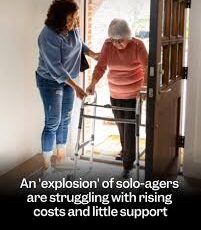
A growing number of older Americans are becoming “solo-agers”—people who live alone, are unmarried and do not have adult children to rely on. Valerie Miller, 68, is one of them. She lives alone in California, works remotely and has few close family connections. As friends move away or pass on, she worries about her future, especially if she can no longer afford housing or manage daily tasks on her own.
Nearly one in three Americans over 65 live alone without children, a sharp increase compared to past generations. Most solo-agers are women. Experts say this trend is driven by smaller families and people living farther apart than before.
Older adults who live alone often face higher risks of financial strain, health challenges and loneliness. Many struggle with rising housing, healthcare and long-term care costs, while affordable, accessible housing options remain limited. Only a small share of homes are designed with features that support aging safely.
Some retirees who can afford it move into age-restricted or independent living communities, but many solo-agers lack the financial flexibility to do so. Specialists warn that people aging alone need to plan earlier—by downsizing, organizing finances and arranging professional or caregiving support—because they may not have family to step in later.