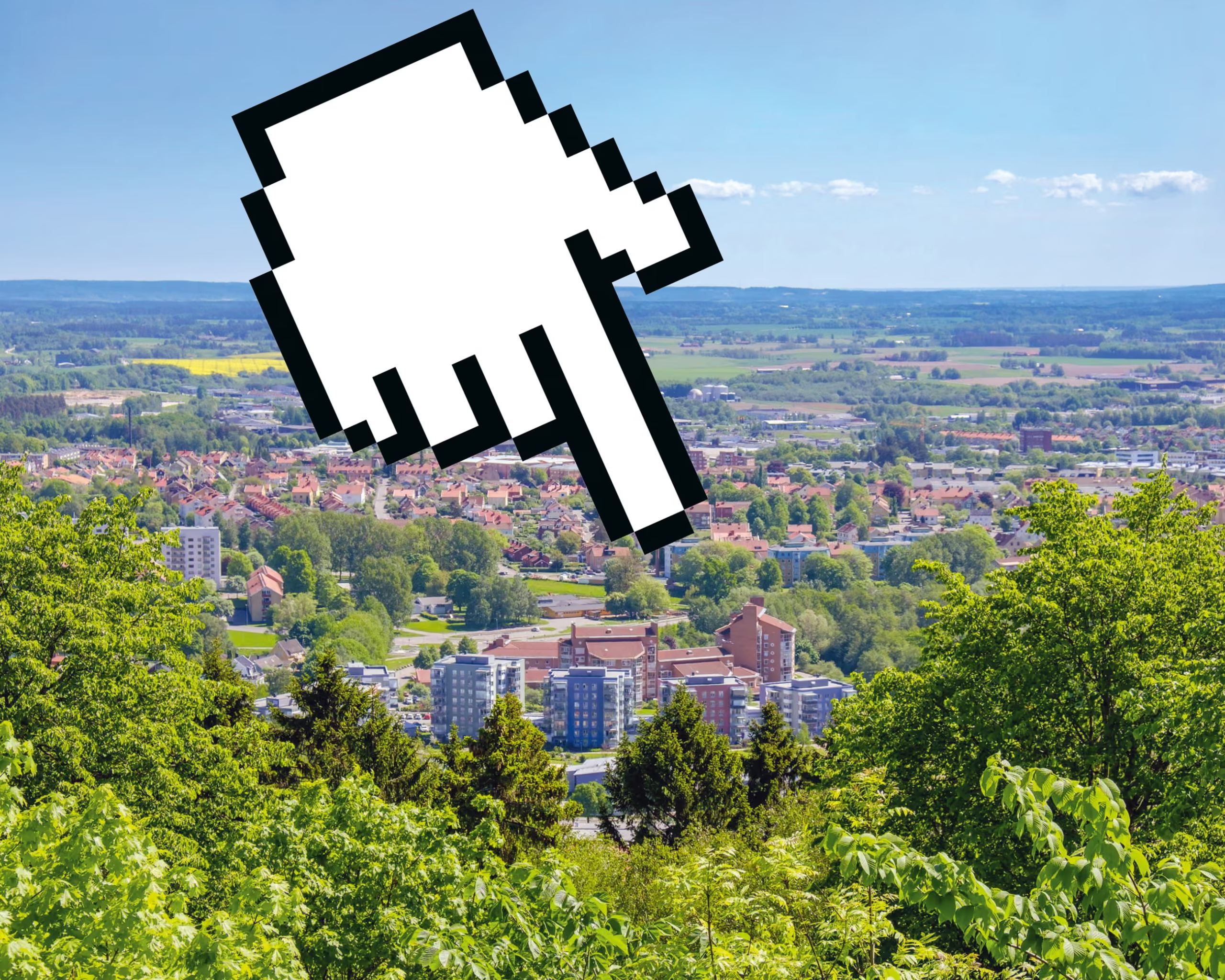
Nestled between Sweden’s largest lakes, Vänern and Vättern, the small city of Skövde has quietly become one of the world’s most surprising powerhouses in video game development. With a population of just 58,000, nearly 1,000 people in Skövde are now working or studying in the gaming sector—a remarkable figure considering the entire UK gaming industry employs only 28,500 people.
Skövde’s rise began in the early 2000s when Ulf Wilhelmsson proposed a video game development degree at the University of Skövde. “If we build it, they will come,” he famously said, despite doubts from colleagues who questioned the viability of a gaming program in a city with no game studios at the time. The initiative proved visionary: today, the university not only trains technical developers but also challenges students to explore broader themes, from gender and identity to historical storytelling.
Next door, Science Park Skövde incubates start-ups through its three-year Sweden Game Start-Up program, helping new teams transform their gaming ideas into sustainable businesses. The incubator offers funding, mentorship, and, as one staff member puts it, a “loan of self-confidence,” ensuring that graduates leave ready to thrive in a competitive industry.
The city has retained three major studios—Coffee Stain, Stunlock, and Iron Gate—all founded by alumni of the local university. Coffee Stain, the creator of the iconic “Goat Simulator,” operates from a repurposed bank complete with a gym, board game room, and wooden meeting spaces filled with artificial trees. Iron Gate produced “Valheim,” a Viking survival game that sold five million copies in its first five weeks. Stunlock’s “V Rising,” a vampire-themed adventure, reached one million sales in its first week.
Developers in Skövde emphasize the importance of community. “The size of this city works to our advantage,” says Josefin Bertsson from Iron Gate. “Here, everyone knows everyone, and it’s easier to form a game development community. People support each other in ways that would be impossible in a larger city like Stockholm.”
Despite Sweden’s global reputation for gaming, the country lacks a national strategy to support the sector. Funding for local programs has fluctuated, with Science Park Skövde seeing its national support drop from £240,000 to £80,000 per year. Yet, the city has proven that focused local initiatives can cultivate international success, offering a blueprint for other small cities worldwide.
Skövde’s achievements are now publicly celebrated, with a “Walk of Game” highlighting the city’s gaming milestones along its cobbled high street. While replicating Skövde’s model elsewhere is challenging, the combination of education, community, and startup support demonstrates the potential of small cities to make a global impact in the gaming industry.