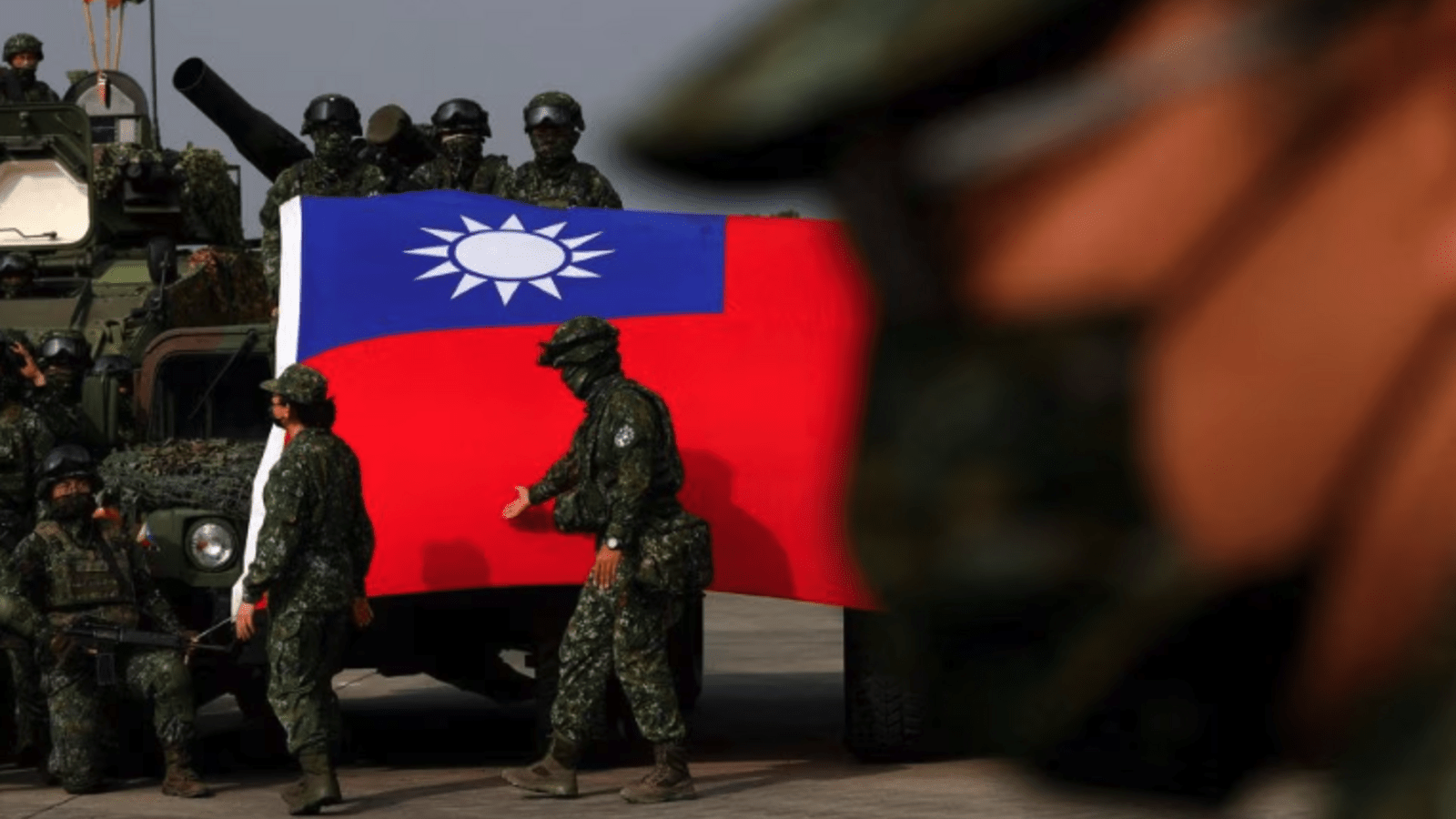
Taipei, Taiwan — The United States and Taiwan have revealed plans for an $11.1 billion arms package, potentially one of the largest military sales Washington has ever extended to the self-governed island. The agreement, still subject to legislative approval, reflects growing security concerns in the Indo-Pacific region and ongoing tensions with China.
The proposed package consists of eight separate acquisitions, including HIMARS rocket systems, anti-tank and anti-armor missiles, loitering suicide drones, howitzers, military software, and spare parts for existing equipment. Together, these purchases are intended to enhance Taiwan’s defensive capabilities and improve its ability to deter potential aggression.
Rising Tensions with China
China’s government continues to claim Taiwan as part of its sovereign territory, despite never exercising control over the island. Beijing immediately criticized the arms deal, describing it as an attempt by the United States to bolster Taiwan’s independence and undermine China’s territorial claims. A Foreign Ministry spokesperson warned that such moves “will backfire” and claimed that efforts to contain China through Taiwan would fail.
Taiwan, for its part, has been steadily increasing its military purchases in recent years. Chinese aircraft and naval vessels now operate near the island almost daily, and Beijing regularly conducts large-scale exercises in surrounding waters. Taiwanese authorities have emphasized that these purchases are necessary to maintain a credible deterrent and to strengthen asymmetric warfare capabilities.
Legal and Political Context
Under US law, Washington is obligated to provide Taiwan with defensive weapons, even in the absence of formal diplomatic relations. Since 2010, the Executive Branch has reported nearly $49 billion in Foreign Military Sales (FMS) to the island. The current $11.1 billion package, which was announced through the Defense Security Cooperation Agency, marks the largest deal in years.
While the agreement requires US congressional approval, Taiwan-related arms sales historically enjoy bipartisan support. On the Taiwanese side, five of the eight items — including HIMARS systems, missiles, and drones — are slated to be funded through a special $40 billion defense budget proposed by President Lai Ching-te in November 2025. That budget is still under consideration by Taiwan’s legislature.
Modernizing Taiwan’s Defense
The proposed budget focuses on strengthening Taiwan’s military with precision artillery, long-range strike missiles, air defense systems, anti-ballistic and anti-armor capabilities, drones and counter-drone systems, AI-powered systems, and weapons co-developed with the United States. It also aims to expand Taiwan’s new “T-Dome” air defense network, announced in October 2025, although public details remain limited.
Raymond Greene, director of the American Institute in Taiwan — Washington’s de facto embassy — said he expects the Taiwanese legislature will approve the increased defense spending. He noted that despite the formal legislative process, there is broad consensus among Taiwan’s political parties regarding the urgent need to bolster national security amid escalating regional threats.
Continuation of US-Taiwan Military Cooperation
This $11.1 billion package follows another deal announced in November, worth $330 million, which focused on aircraft spare parts and maintenance. At that time, Taiwanese officials confirmed plans to raise defense spending above 3% of GDP in the next year, aiming to reach 5% of GDP by 2030.
As tensions continue to mount across the Taiwan Strait, the latest arms package underscores both the strategic importance of Taiwan in US defense planning and the increasingly complex security dynamics of the Indo-Pacific.