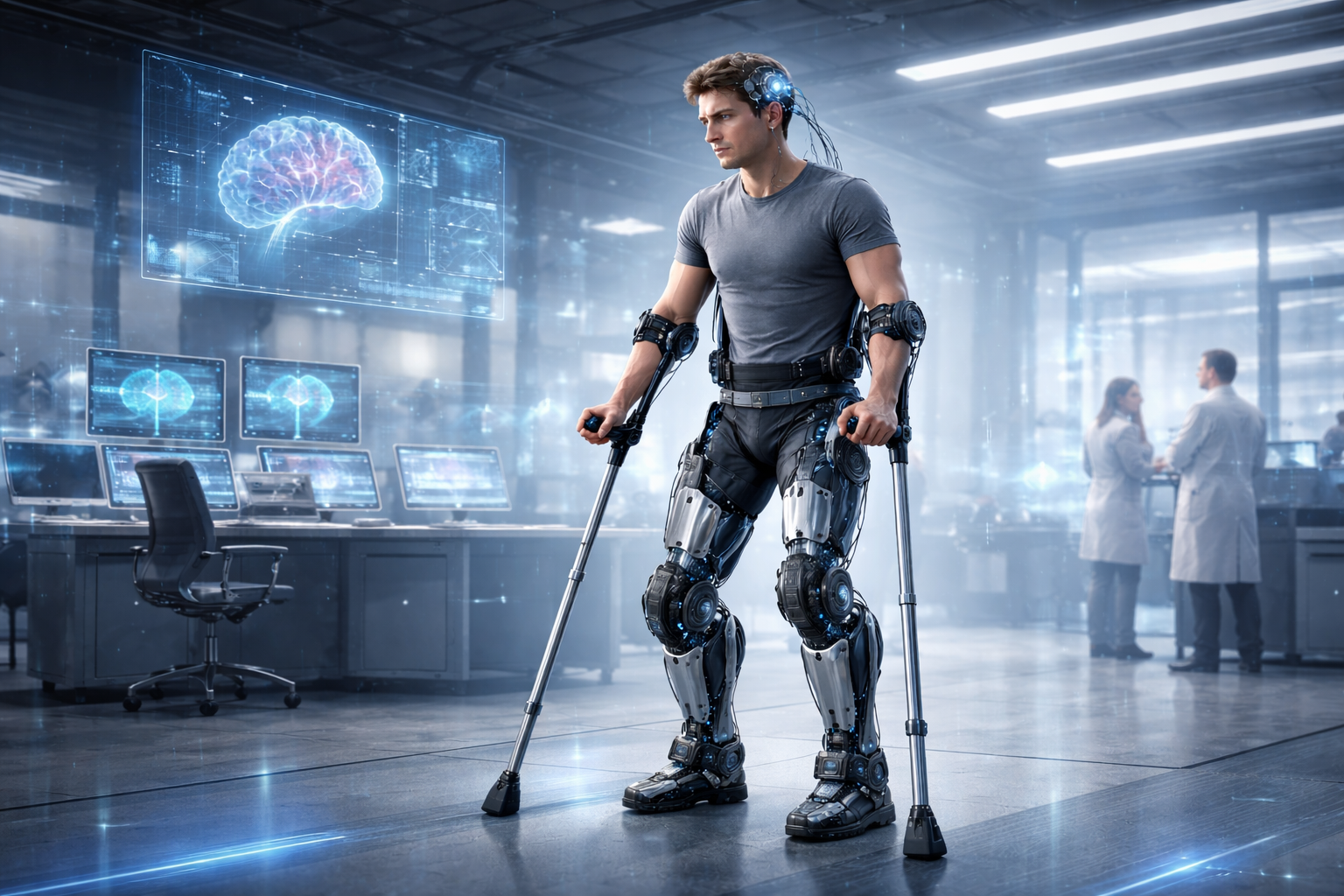
Recent breakthroughs in neurotechnology are transforming the lives of people with paralysis by enabling them to control robotic limbs using only their thoughts. Through advanced brain-computer interfaces, neural signals generated in the brain are captured, interpreted, and converted into precise mechanical movements, allowing users to perform actions that were previously impossible.
At the core of this innovation is the integration of artificial intelligence, which helps decode complex brain activity and accurately translate human intention into real-time robotic motion. By learning patterns in neural signals, AI systems improve responsiveness and control, creating smoother and more natural movements. This fusion of neuroscience and machine learning represents a critical milestone in the development of assistive technologies.
For patients with severe mobility impairments, such as spinal cord injuries or neurological disorders, these advancements offer renewed independence and improved quality of life. Tasks like grasping objects, moving arms, or interacting with the environment can now be achieved without physical muscle movement, relying solely on brain signals.
As healthcare technology continues to evolve, brain-computer interfaces are emerging as powerful tools in rehabilitation and long-term care. Researchers believe that future developments could further enhance precision, reduce the need for invasive procedures, and expand access to these systems.
This progress marks a significant step forward in human-machine collaboration, demonstrating how technology can bridge the gap between intention and action. Neurotechnology is not only redefining mobility but also reshaping the future of medicine and human potential.