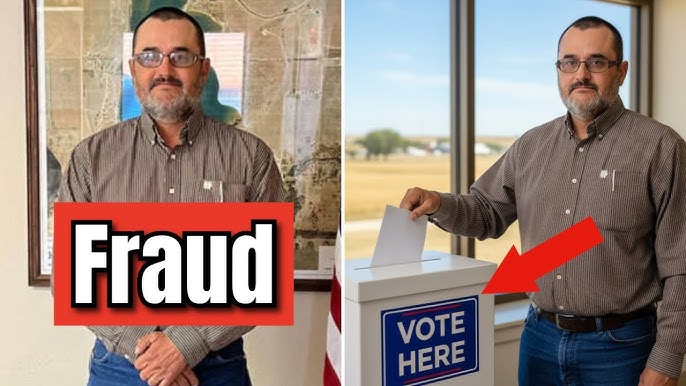
Jose “Joe” Ceballos, a Mexican citizen and green card holder from Coldwater, Kansas, has been charged with felony voter fraud for allegedly participating in U.S. elections dating back to the 1990s. The charges were filed by Attorney General Kris Kobach shortly after his reelection in November 2025, and Ceballos now faces the possibility of prison time and deportation.
The case has sparked a range of reactions among local residents. Some community members expressed support for Ceballos, noting his long-standing presence and contributions to the town. “He’s more American than I am,” said a friend of Ceballos. Similarly, rancher Dennis Swayze commented humorously, “If deportation happens, Kobach might have trouble showing up here, especially if he expects to stay with us for a while.” Others, however, saw the charges as necessary to uphold election integrity. “Democrats think the government provides, while Republicans think the government should let us just do our thing,” said another local, reflecting the broader political perspectives influencing reactions.
According to officials, the case came to light when Ceballos applied for U.S. citizenship in February 2025. The application prompted a review of his voter registration and voting history, which revealed potential violations. Attorney General Kobach emphasized the importance of trust in the electoral system: “In large part, our system is based on trust. When a person registers to vote or signs the pollbook claiming they are a U.S. citizen, we rely on that statement to be truthful. In this case, we allege Mr. Ceballos violated that trust.”
The Kansas Secretary of State, Scott Schwab, provided further context on how the alleged violations were discovered. He noted that modern verification tools, including the SAVE program implemented under the Trump administration, allowed officials to cross-check voter rolls and citizenship records more effectively than in previous years. “We now have tools we haven’t had in over a decade to verify voter eligibility,” Schwab said. He praised the program for helping states prevent potential voter fraud and for assisting in uncovering cases like Ceballos’s.
Local authorities highlighted that while noncitizen voting is relatively rare, it is considered a serious offense because it can undermine the weight of legitimate votes. Kobach explained, “Every time a noncitizen votes, it effectively cancels out a U.S. citizen’s vote.” Skip Herd, the Coldwater City Attorney, confirmed that Ceballos had been a registered voter since 1990 and that the citizenship application earlier this year brought his legal status into question.
The case has ignited debates in Coldwater and beyond over the balance between community trust, legal compliance, and election security. Supporters of strict enforcement praised the charges as a necessary safeguard, while others criticized what they see as overly aggressive prosecution. Some residents voiced concern about fairness and the broader implications for immigrant communities, emphasizing that long-term members of a town might face severe consequences for administrative oversights or misunderstandings of eligibility rules.
The investigation and subsequent charges also underscore the impact of federal and state-level systems designed to maintain election integrity. Officials credited the Trump-era policies for improving verification methods and providing additional resources to detect potential violations. Schwab acknowledged years of collaboration with Attorney General Kobach to implement proof-of-citizenship requirements and noted that these tools are essential for identifying discrepancies in voter rolls.
As the case develops, it is expected to draw attention beyond Coldwater, highlighting national discussions around voter eligibility, citizenship verification, and election security. The combination of legal scrutiny, community debate, and political implications makes the Ceballos case a focal point in ongoing conversations about the integrity of U.S. elections.