Sharp ideological divisions within the conservative movement burst into public view this week at Turning Point USA’s annual AmericaFest, as prominent right-wing figures openly clashed over conspiracy theories, antisemitism, and the future direction of the Republican Party.
Held in Phoenix, the sold-out conference marked the first major Turning Point USA event since the killing of its founder, Charlie Kirk, earlier this year. What was intended to be a moment of unity instead underscored deep fractures within conservative ranks—particularly among younger activists and media personalities increasingly influenced by extremist figures such as Nick Fuentes, a known white supremacist and Holocaust denier.
Ben Shapiro ignites the confrontation
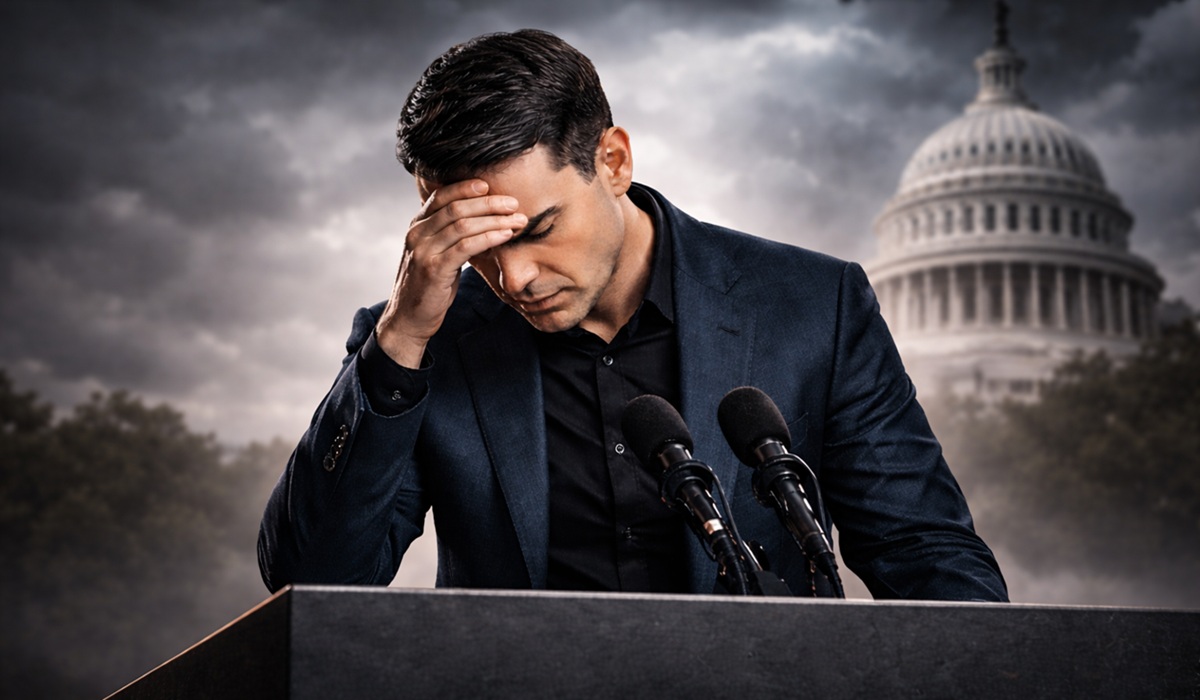
The tension reached its peak when conservative commentator Ben Shapiro delivered a blistering opening address that directly targeted fellow Republicans and right-wing pundits. Without naming all of them initially, Shapiro warned that the conservative movement was being undermined from within by figures who promote conspiracies, antisemitism, and misinformation under the guise of populism.
“The conservative moment is also in danger from charlatans who claim to speak in the name of principle, but actually traffic in conspiracism and dishonesty,” Shapiro said. “These people are frauds, and they are grifters, and they do not deserve your time.”
As his speech continued, Shapiro made his criticisms explicit. He condemned Candace Owens for spreading what he described as “baseless trash” regarding Kirk’s murder, criticized Megyn Kelly for failing to challenge Owens’ claims, and accused Tucker Carlson of legitimizing extremist views by giving Fuentes a platform. He also took aim at Steve Bannon, dismissing him as a former “PR flack for Jeffrey Epstein.”
“If you host a Hitler apologist, Nazi-loving, anti-American piece of refuse like Nick Fuentes,” Shapiro said of Carlson, “and you proceed to praise him, you ought to own it.”
Public rebuttals and personal attacks
The figures targeted by Shapiro did not stay silent. Throughout the event, several fired back, turning AmericaFest into a rare display of open conservative infighting.
Carlson reportedly mocked Shapiro as “pompous” and ridiculed calls to “deplatform” extremists at an event meant to celebrate free speech. Bannon went even further, labeling Shapiro a “cancer” on the movement, while Kelly hinted publicly that her relationship with Shapiro may be permanently damaged.
Candace Owens responded with some of the harshest language, accusing Shapiro of betraying Charlie Kirk’s legacy and dismissing him as a “little worm.” The exchanges, amplified by social media and national news coverage, highlighted how personal and bitter the disagreements have become.
Broader ideological fault lines
Beyond personal disputes, the conference revealed deeper philosophical divides within the Republican Party. Former presidential candidate Vivek Ramaswamy used his speech to denounce the concept of a “Heritage American,” a term increasingly popular in far-right circles and often used to imply that immigrants and their descendants are less authentically American.
“The idea that a ‘heritage American’ is more American than another American is un-American at its core,” Ramaswamy said, while also condemning antisemitism and recounting his own experiences with bigotry.
His remarks stood in contrast to the tone set by Vice President JD Vance, who largely avoided addressing concerns about rising extremism within conservative circles. According to reports, Vance dismissed the idea of publicly calling out fellow conservatives.
“I didn’t bring a list of conservatives to denounce and deplatform,” Vance said during his Sunday speech, signaling a reluctance to confront the issue head-on.
A party struggling with its identity
The disputes at AmericaFest mirror broader tensions roiling the Republican Party. Recent controversies—including revelations of racist and antisemitic messages in group chats among young Republicans and backlash over media figures platforming extremists—have forced party leaders to confront uncomfortable questions about where the movement is headed.
Kevin Roberts, president of the Heritage Foundation, recently faced criticism after initially defending Carlson’s interview with Fuentes before later apologizing amid backlash from within conservative ranks.
Turning Point USA CEO Erika Kirk, who assumed leadership after her husband’s death, attempted to frame the public clashes as evidence of a healthy internal debate rather than a sign of crisis. Yet for many observers, the visible hostility suggested a movement deeply divided over how—or whether—to police its own boundaries.
An uncertain path forward
AmericaFest 2025 may ultimately be remembered less for its speeches or policy proposals than for the raw, unfiltered infighting it exposed. As Republicans head into another contentious election cycle, the conference raised pressing questions about whether the party can reconcile free speech absolutism with the need to confront extremism—or whether these divisions will continue to widen.
For now, the conservative movement appears united mainly in its disagreements, with no clear consensus on how to address the growing influence of conspiracy theories, antisemitism, and radical ideologies within its own ranks.