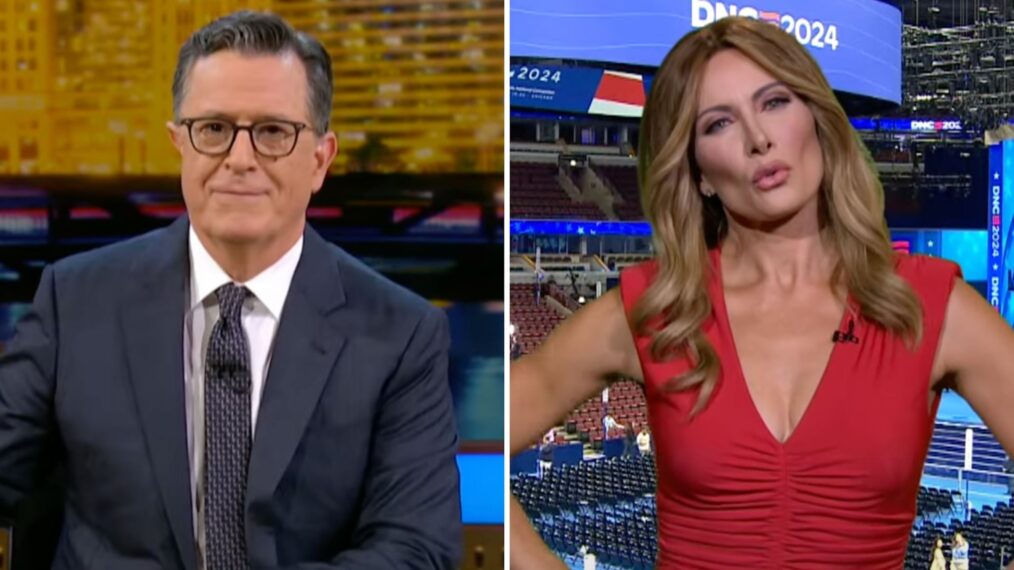
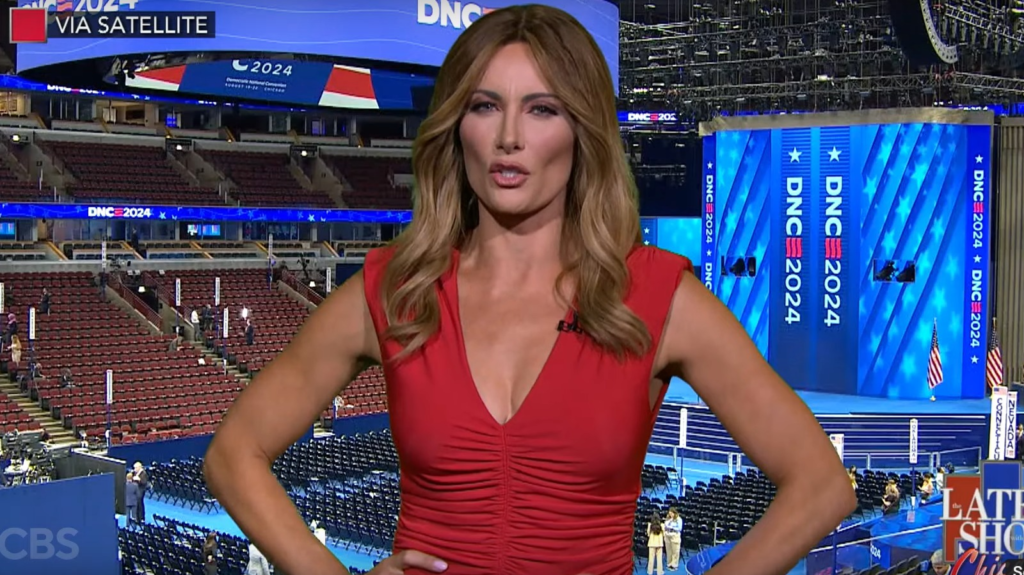
What began as a routine holiday segment on The Late Show quickly veered off course when Stephen Colbert introduced what sounded like a harmless seasonal bit. Instead of gentle satire, viewers were met with an icy caricature of Melania Trump that immediately rejected holiday cheer altogether.
Declaring she “couldn’t care less about the holidays,” the character tore into Christmas traditions without restraint—mocking trees as obligations, gifts as meaningless clutter, and cookies as transactional bribes. The bluntness caught the audience off guard, triggering explosive laughter rather than polite chuckles.
Even Colbert appeared momentarily stunned, pausing as the sketch surged beyond expected rhythms. That pause underscored the disruption: the bit wasn’t warming the room, it was deliberately burning through expectations.
The exaggerated cruelty was clearly intentional, but it resonated because it echoed a wider cultural fatigue with forced cheer and performative joy. Clips spread rapidly online, sparking debate. Supporters praised the sketch as fearless satire that punctured seasonal pressure, while critics accused it of unnecessary cynicism during an emotionally sensitive time.
That division only fueled its virality. By refusing to soften or redeem itself, the performance leaned fully into discomfort, turning exaggeration into commentary. The contrast between Colbert’s restraint and the character’s venom sharpened the impact, making the moment feel spontaneous even if carefully crafted.
Rather than offering holiday warmth, the sketch delivered confrontation—and in doing so, tapped into feelings many people quietly carry during the season. Whether it delighted or alienated viewers, it succeeded in what late-night comedy does best: breaking expectations and igniting conversation.
For some, it dampened holiday cheer. For others, it offered relief. Either way, the moment proved that satire is most memorable when it refuses to play it safe.