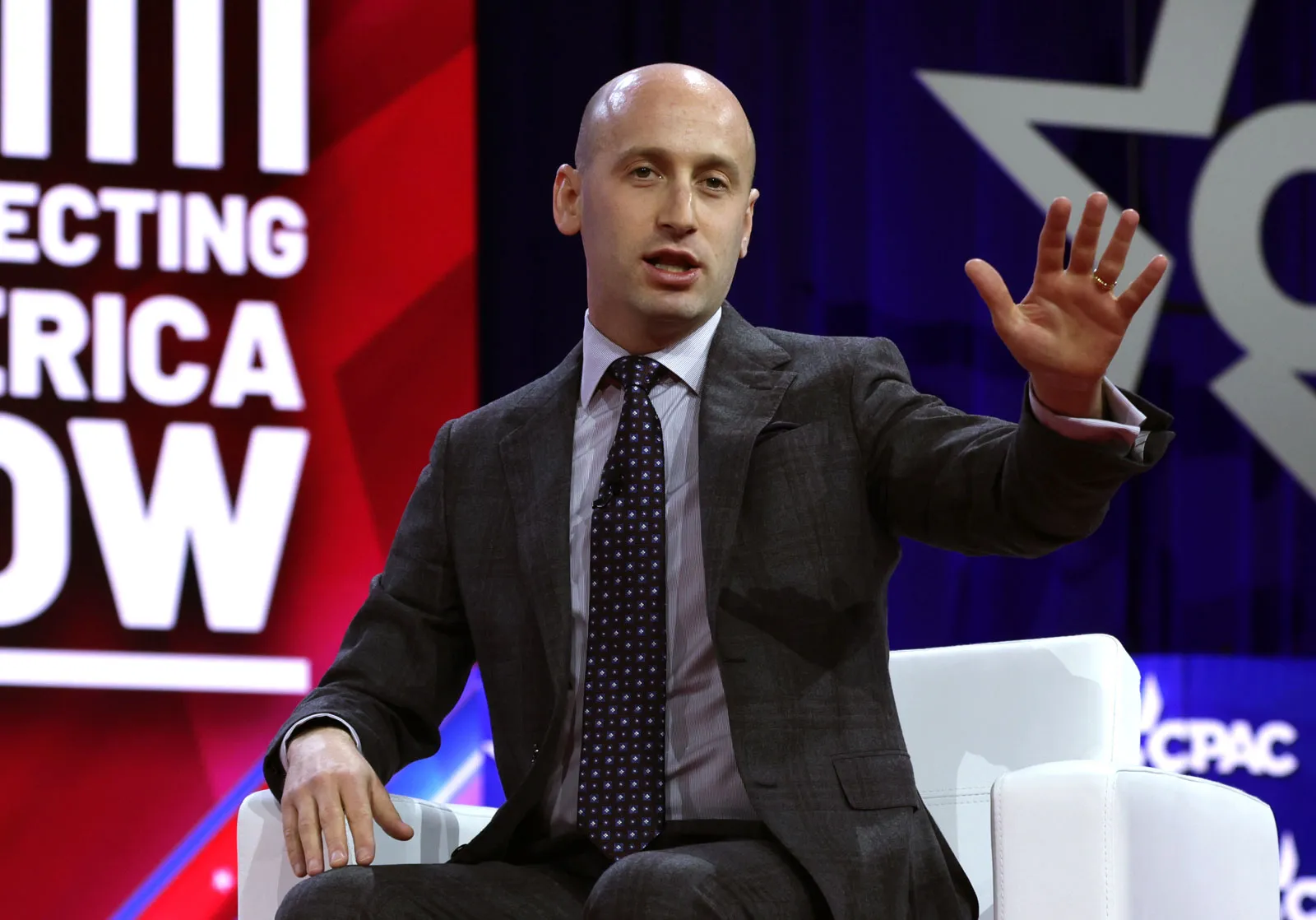
On Friday, December 19, White House Deputy Chief of Staff Stephen Miller appeared on Fox News Channel’s Jesse Watters Primetime, weighing in on reports of alleged large-scale welfare fraud in Minnesota, which has been linked to Somali immigrants. The discussion quickly drew attention for Miller’s controversial remarks referencing Somalia’s history of piracy and linking it to the fraudulent activities he said are being committed by Somali refugees in the United States.
During the interview, host Jesse Watters framed the discussion in the context of broader immigrant fraud, citing a $7 million welfare fraud scandal involving Haitian nationals. “All right, Miller, we’ve got Haitians now on the gravy train, not just eating the dogs and cats anymore,” Watters quipped, referring to earlier controversies about relief benefits.
Miller responded by highlighting Minnesota as the focal point of the Somali welfare fraud allegations, but he also extended the critique to other states. “Well, first of all, regarding the situation in Minnesota, by the way, not just Minnesota — we have Somali refugees that were dumped here by Democrats in Ohio and Massachusetts,” he said. He argued that the alleged fraud was predictable given the socioeconomic backgrounds of many refugees and the challenges of integrating large immigrant communities without adequate oversight.
Linking Welfare Fraud to Somalia’s Historical Context
In a controversial segment of the interview, Miller connected the alleged welfare fraud to Somalia’s history of piracy. “Let me just say we should not be shocked. When you import a population whose primary occupation is pirate, that they are going to come here and steal everything we have,” he stated. Miller elaborated, noting that piracy has long been a Somali industry due to the country’s extensive coastline and limited economic development.
“Somalia has this giant coastline, and the only industry they have created, after hundreds of years, is piracy, stealing what anyone going through who has actually built something has made,” Miller said, framing the alleged fraud in Minnesota as an extension of this historical pattern. He concluded, “So, yes, the pirates have stolen all of our money, and they have to go home, Jesse. That’s the situation we’re in right now.”
Miller also posted on X, formerly Twitter, arguing that Somali refugees should not be rewarded for leaving their home country to participate in U.S. social welfare programs. “The entire Somali refugee program is predicated on a lie. Destroying your own country does not give you the right to become a citizen in ours,” he wrote, drawing criticism from immigrant advocacy groups.
Statistical Claims and Controversy
During his commentary, Miller cited welfare statistics, noting that reportedly 81% of Somali households rely on welfare, compared to 21% of American families. He emphasized that this figure underestimates the full scope because it includes descendants of Somali migrants and other immigrant groups who are now part of the broader American population. These claims have been widely disputed by researchers and advocacy organizations, who argue that focusing on a single community oversimplifies the complex socioeconomic factors at play.
Minnesota Welfare Fraud Investigation
The allegations in Minnesota have garnered national attention. State authorities have launched investigations into multiple cases of welfare fraud involving Somali immigrants, uncovering instances of improper claim submissions and misuse of state-provided benefits. While exact figures remain under investigation, reports suggest that fraud may involve millions of dollars annually.
Local officials caution, however, that these cases represent a small fraction of the Somali-American population in the state, which numbers roughly 40,000 people, primarily concentrated in Minneapolis-Saint Paul. Somali community leaders argue that broad-brush characterizations unfairly stigmatize an entire immigrant population.
Community and Political Reactions
Miller’s remarks have sparked a mix of reactions. Supporters in conservative circles praised him for drawing attention to what they describe as a national problem with immigration and social welfare oversight. Republican lawmakers have increasingly pushed for stricter verification processes for state benefits, including enhanced background checks for recent refugees.
At the same time, Somali-American community leaders and civil rights organizations condemned Miller’s comments. Abdirahman Yusuf, executive director of the Somali-American Advocacy Network in Minneapolis, said, “Linking Somali immigrants to piracy and crime perpetuates harmful stereotypes. Most Somali families are hardworking, law-abiding Americans who contribute to their communities. Fraud is not unique to any single population, and these remarks only fuel division.”
Advocates have also called for more culturally sensitive approaches to addressing fraud, including providing better education about benefits programs, offering language support, and improving access to employment opportunities.
The Broader Immigration Debate
Miller’s comments fit into a larger national debate over immigration policy, welfare programs, and refugee resettlement. Critics argue that such statements politicize vulnerable populations and risk inflaming anti-immigrant sentiment, while supporters contend that stricter oversight is necessary to prevent abuse and protect taxpayer resources.
Minnesota Governor Tim Walz has urged calm, emphasizing that investigations must proceed based on evidence rather than rhetoric. “We are taking allegations seriously, but it’s crucial to avoid stigmatizing entire communities based on the actions of a few,” Walz said in a press statement.
Looking Ahead
As investigations continue, the discussion around Somali immigrant welfare fraud in Minnesota is likely to remain politically charged. Miller’s remarks, broadcast on a national platform, may influence debates in Congress over refugee resettlement programs and social welfare eligibility, particularly in states with large immigrant populations.
The Minnesota Department of Human Services has stated that it will release more details once investigations are concluded. In the meantime, the Somali-American community and advocacy groups are calling for dialogue, transparency, and community support, emphasizing that most residents seek to integrate successfully and contribute positively to American society.