By Will Tanner | December 24, 2025
Boston Mayor Michelle Wu is facing a wave of criticism and ridicule after delivering a public speech in which she highlighted the role of Somali migrants in the city’s achievements. The remarks, which many have labeled historically inaccurate and politically provocative, have fueled heated online debates and prompted reactions from both local residents and national commentators.
The Speech That Ignited Controversy
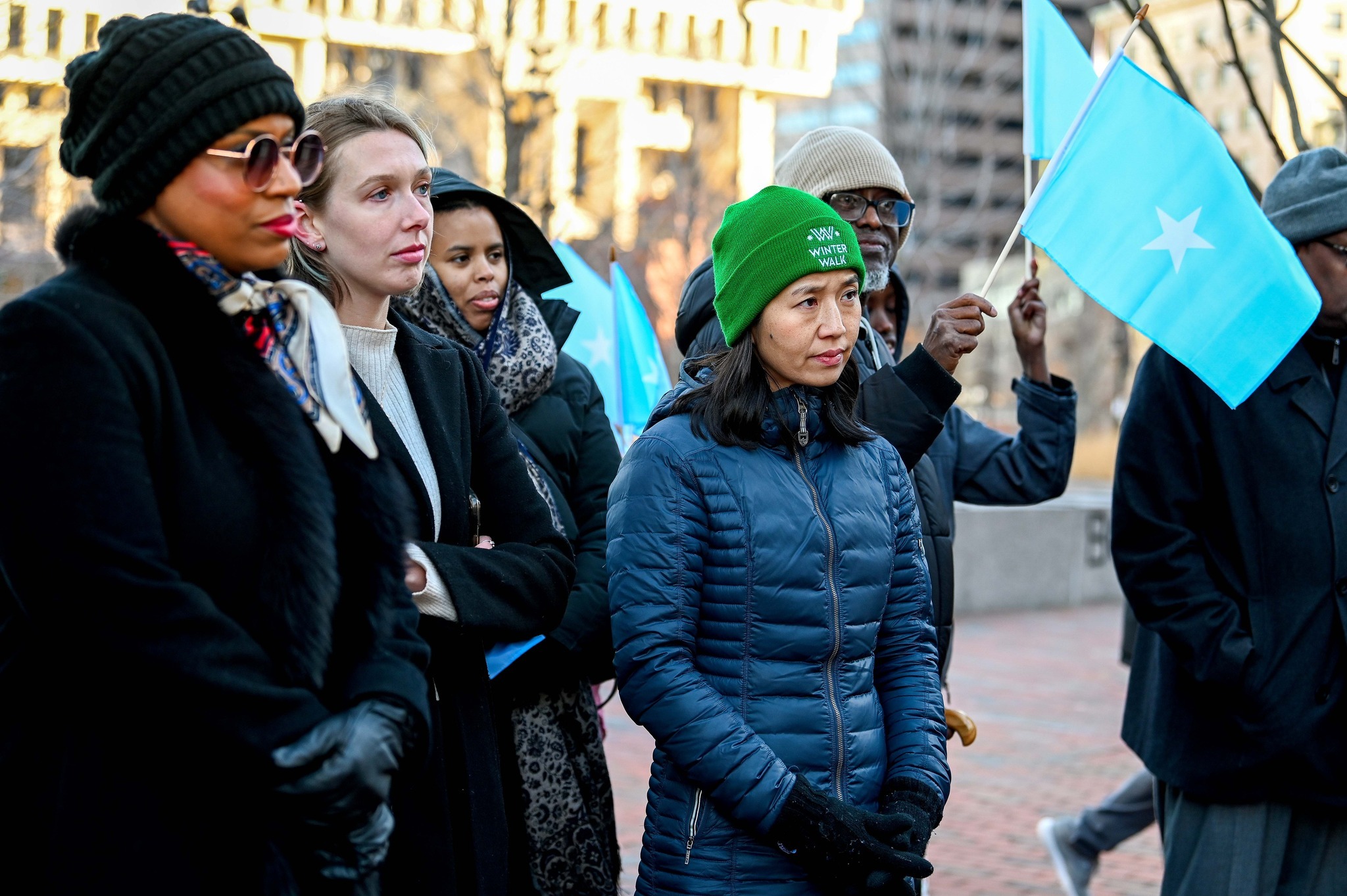
During the address, Mayor Wu emphasized the contributions of Somali migrants to Boston’s development, claiming that the community had played an essential role in areas such as public safety, economic growth, and education. She asserted:
“You cannot talk about any achievement that the city of Boston has had, in safety, jobs and economic development, in education, without talking about the Somali community that has lifted our city up.”
Wu went further, defending Somali migrants against criticism and framing any opposition as rooted in prejudice:
“We are proud and we are grateful for our Somali community and for our Somali American neighbors. Boston and the country are clear that hate has no place in our society.”
The Mayor concluded by pledging continued support for immigrant communities, stating:
“We will use every attack to actually strengthen and expand the services available, to empower and work alongside our community members who are already doing so much good in the world and setting the example for the rest of the country.”
Public Reaction and Online Backlash
The remarks quickly drew widespread attention on social media, with critics accusing Mayor Wu of overstepping historical facts. Conservative commentators and historians highlighted that Somali migrants had no connection to Boston’s colonial heritage or its role in the American Revolution.
On X (formerly Twitter), political commentator Tom Elliot shared a quote from revolutionary leader Samuel Adams, emphasizing the importance of civic virtue:
“’It is in the interest of tyrants to reduce the people to ignorance and vice. For they cannot live in any country where virtue and knowledge prevail…’ — Samuel Adams”
Other users mocked Wu’s claims with sarcastic remarks, including:
- “Hi @MayorWu, there were zero Somalians at the Boston Tea Party. You seem to be smart enough to know this.”
- “Yes, my family often spoke of their bravery alongside my ancestors at Bunker Hill.”
These reactions reflect the broader skepticism and outrage from critics who argue that Mayor Wu’s comments exaggerate the impact of Somali migrants while ignoring centuries of Bostonian history.
The Broader Context: Immigration and Somali Communities in the U.S.
Boston’s sanctuary city status has long placed it at the center of national debates about immigration, particularly regarding Somali migrants. In recent years, Somali households in Minnesota have been linked to high-profile welfare fraud cases, drawing national attention. Similar reports have emerged from other states, such as Maine, further fueling criticism of policies perceived to encourage mass migration without oversight.
Mayor Wu’s speech appears to double down on a pro-immigration stance at a politically sensitive moment, defending a community under scrutiny while framing detractors as driven by prejudice rather than legitimate concern.
Experts note that cities with large immigrant populations often face challenges balancing cultural integration, economic contributions, and public perception. While immigrants undoubtedly contribute to local economies and community initiatives, attributing the entirety of a city’s progress to a single group—especially one with no historical connection to foundational events—can provoke strong backlash.
Historical Accuracy and Political Implications
Boston is a city steeped in history, from the Revolutionary War and the Boston Tea Party to its colonial-era institutions. Critics argue that Wu’s speech distorts this history, conflating contemporary immigration policy with foundational achievements of the city.
“This is a misrepresentation of Boston’s history,” said Dr. Elaine Patterson, a historian specializing in New England colonial studies. “While Somali immigrants, like many immigrant groups, contribute to modern society, they had no role in events that shaped Boston’s early development or the nation’s founding.”
From a political standpoint, the remarks highlight a broader tension between progressive immigration policies and conservative criticism, particularly in cities designated as sanctuary hubs. Mayor Wu’s defenders argue that her comments were intended to celebrate modern contributions to community-building and civic engagement, rather than to rewrite history.
Local and National Repercussions
The speech has amplified debate over the role of Somali migrants in American cities, sparking discussions about integration, economic impact, and social services. For Boston, the controversy risks diverting attention from ongoing city projects and policy initiatives, while also creating a flashpoint in the broader national conversation about immigration and sanctuary cities.
While Mayor Wu has not issued a follow-up clarification, the online backlash continues to grow. Many commentators suggest that the Mayor’s framing of the Somali community as central to Boston’s achievements oversimplifies complex social and economic realities and risks alienating constituents who feel historical accuracy is being compromised.
Conclusion
Mayor Wu’s controversial speech underscores the challenges faced by political leaders in balancing recognition of immigrant contributions with historical and factual accuracy. In an era of heightened political polarization, statements that touch on immigration, race, and historical achievements are especially likely to attract scrutiny.
As the debate continues, Boston remains a focal point in discussions about sanctuary city policies, immigrant integration, and the politics of historical narrative in America. Whether Mayor Wu’s remarks will have lasting political consequences remains to be seen, but they have undoubtedly reignited conversations about immigration, community recognition, and historical accountability.