A Florida Republican congressman has ignited a nationwide political firestorm after publicly calling not only for the removal of Rep. Ilhan Omar (D‑MN) from Congress but also for her deportation from the United States — remarks that have drawn sharp criticism from constitutional scholars, civil rights groups, and fellow lawmakers.
Comments Made During News Interview
The controversy erupted following an appearance by Rep. Randy Fine (R‑FL) on Newsmax, where he spoke with host Lidia Curanaj on December 21. During the interview, Fine argued that Rep. Omar represents what he described as systemic failures within the U.S. immigration system and claimed the country would be better off without her political presence.
“Ilhan Omar is a walking example of everything that is wrong with our legal immigration policy,” Fine said during the segment.
He went further, asserting that some immigrants admitted through legal channels harbor hostility toward the United States and contribute little to civic life — a claim that immigration experts widely dispute.
Escalation Beyond Congressional Criticism
While members of Congress often call for censure, ethics investigations, or even expulsion of colleagues, Fine’s remarks escalated beyond those traditional boundaries. He stated that he believes Rep. Omar should be removed not only from Congress but from the country itself.
“I don’t think Ilhan Omar should be expelled from Congress,” Fine said. “I think she should be expelled from the United States.”
Fine later reiterated the comments on social media, posting on X that he was actively working toward such an outcome. The post quickly went viral, prompting both condemnation and support along partisan lines.
Legal Reality: Deportation of a U.S. Citizen
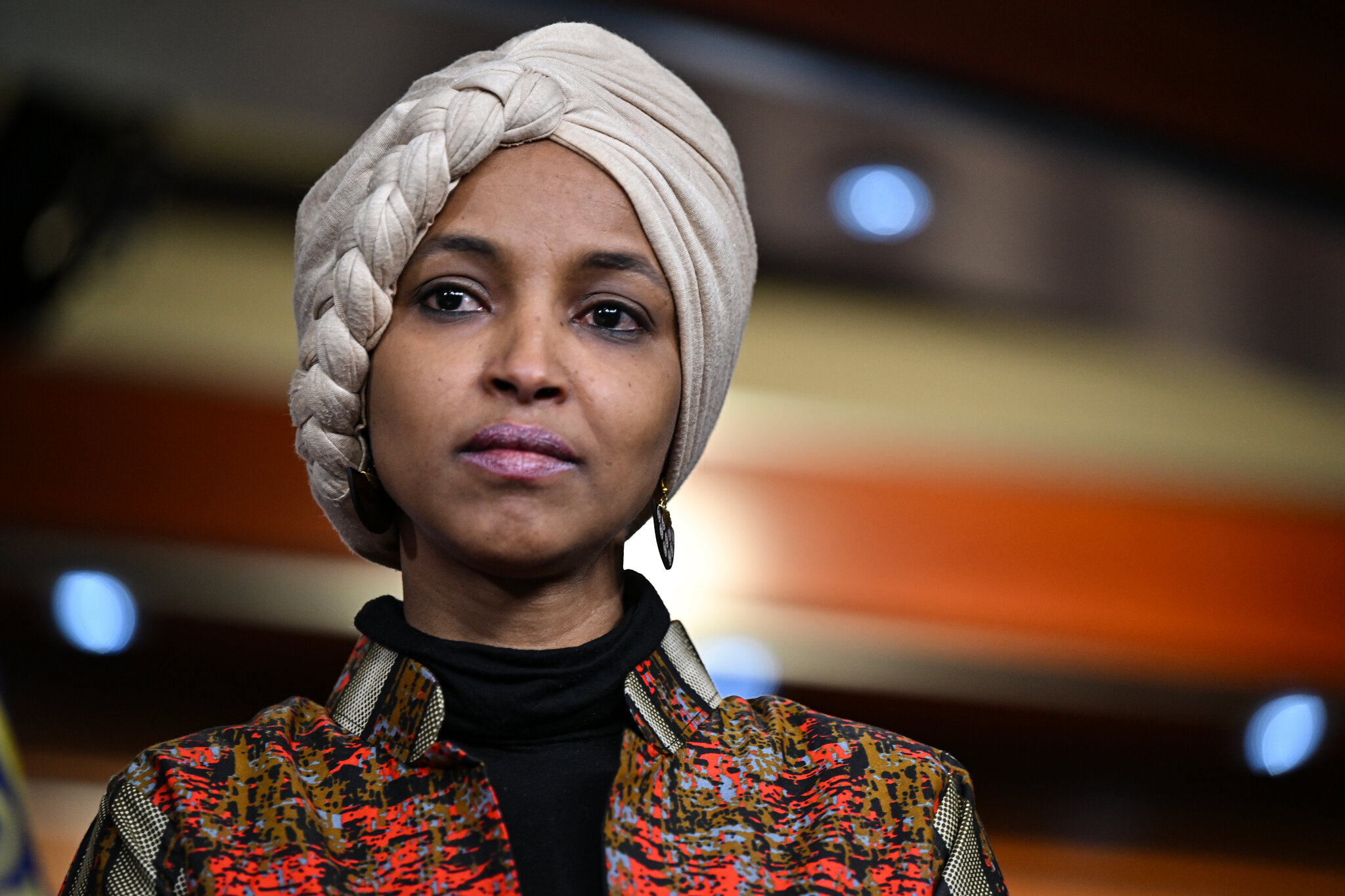
Rep. Ilhan Omar is a naturalized U.S. citizen who has served in Congress since 2019. Under the U.S. Constitution and federal law, deportation of a citizen is not legally possible except in extraordinarily rare cases involving proven fraud during the naturalization process — a standard that legal experts say is not remotely applicable in Omar’s case.
“The idea of deporting a sitting member of Congress who is a U.S. citizen has no legal basis,” said Professor Daniel Whitmore, a constitutional law expert at Georgetown University. “Citizenship is not conditional on political views.”
The First Amendment protects political speech, including harsh criticism of the U.S. government, regardless of whether it is popular or controversial.
Trump’s Remarks Add Fuel to the Fire
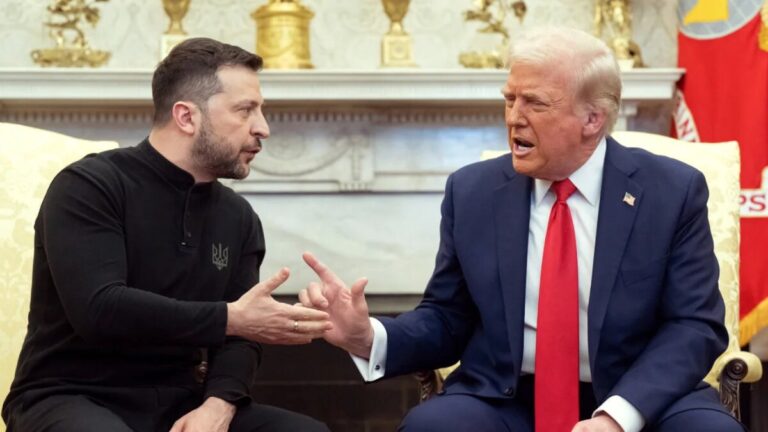
Fine’s comments followed recent remarks by former President Donald Trump during a Fox News appearance, in which Trump harshly criticized Rep. Omar and Somali immigrants more broadly.
Trump accused Omar of routinely disparaging the Constitution and the United States and questioned the value of Somali immigration. His remarks quickly became a flashpoint, drawing condemnation from immigrant advocacy groups and praise from segments of his political base.
The White House has not issued an official clarification on whether Trump’s remarks were rhetorical or policy-oriented.
Reaction From Lawmakers and Advocacy Groups
Democratic leaders condemned Fine’s comments as unconstitutional and dangerous.
“Calling for the deportation of a U.S. citizen because you disagree with her politics is authoritarian rhetoric,” said Rep. Jamie Raskin (D‑MD). “This crosses a line.”
Civil rights organizations warned that such statements could contribute to hostility toward immigrant communities and elected officials of immigrant background.
“This kind of rhetoric undermines democratic norms and places elected officials at risk,” said the American Civil Liberties Union in a statement.
Some conservative commentators, however, defended Fine’s remarks as political speech, arguing he was expressing frustration with immigration policy rather than proposing a legally viable action.
Broader Political Context
The incident occurs amid heightened national debate over immigration, refugee admissions, and U.S. foreign policy. Somali communities, particularly in Minnesota, have been at the center of recent political controversy due to high-profile fraud cases — though experts caution against conflating criminal cases with entire ethnic or national groups.
Rep. Omar has not responded directly to Fine’s remarks, though she has previously stated that criticism of U.S. policy is an expression of democratic participation, not disloyalty.
Conclusion
While Rep. Fine’s comments have no legal pathway to implementation, they have reignited debate over the boundaries of political discourse, the rights of naturalized citizens, and the role of inflammatory rhetoric in American politics.
As the 2026 election cycle approaches, immigration and national identity remain among the most polarizing issues in the country — and this controversy underscores how quickly those debates can escalate beyond policy into constitutional questions.