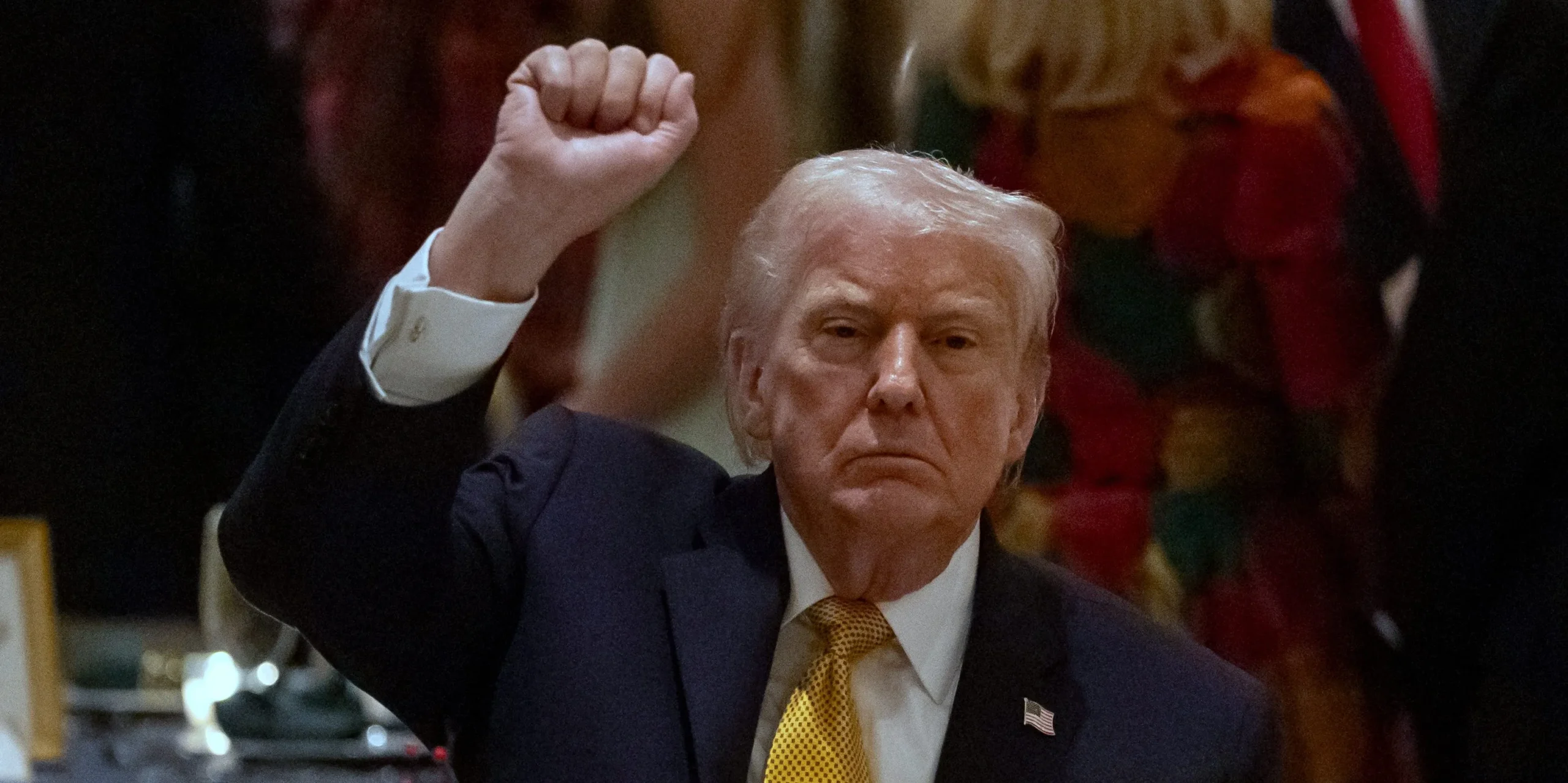
PALM BEACH, FL — The United States carried out a targeted airstrike against Islamic State militants in northwest Nigeria, with President Donald Trump taking personal credit for directing the operation. Trump emphasized the move was aimed at protecting Christian communities facing violence and persecution in the region, describing the militants as “ISIS Terrorist Scum” on his Truth Social platform.
“Tonight, at my direction as Commander in Chief, the United States launched a powerful and deadly strike against ISIS Terrorist Scum in Northwest Nigeria, who have been targeting and viciously killing, primarily, innocent Christians, at levels not seen for many years, and even centuries!” Trump wrote.
Details of the Strike
The US Africa Command (AFRICOM) confirmed that the operation was conducted at the request of Nigerian authorities and targeted multiple ISIS militants. No details on civilian casualties were immediately released, though military officials emphasized the precision of the strike.
Reuters reported that the intelligence-gathering phase for the operation began in late November, with aerial reconnaissance flights covering large parts of northwest Nigeria. The strikes mark a significant escalation of US military involvement in the region, which has long struggled with Islamic extremist insurgencies, including Boko Haram and ISIS-affiliated groups.
Trump’s Justification and Rhetoric
Trump framed the action as a moral imperative to protect Christians, reiterating warnings he had issued in October 2025 about the “existential threat” facing Christians in Nigeria.
“I have previously warned these Terrorists that if they did not stop the slaughtering of Christians, there would be hell to pay, and tonight, there was,” Trump wrote.
He also praised US military capabilities:
“Our defense officials have executed numerous perfect strikes, as only the United States is capable of doing. Our Country will not allow Radical Islamic Terrorism to prosper.”
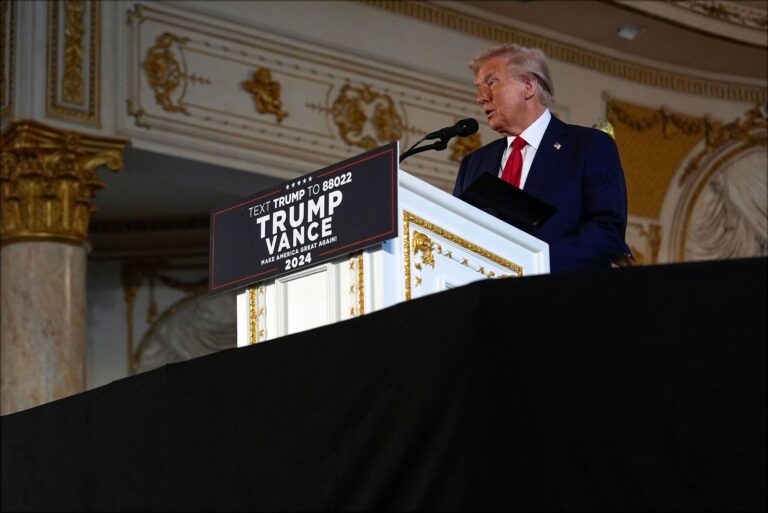
Trump’s statement was issued while at Mar-a-Lago in Palm Beach, Florida, where he has been spending the holiday season.
Background on Nigeria’s Religious and Security Situation
Nigeria, Africa’s most populous nation, is roughly evenly split between Muslims and Christians, with a historical north-south religious divide. Islamist extremist groups, including ISIS-affiliated factions and Boko Haram, primarily operate in the northern regions, targeting both Muslims and Christians, often in highly complex and volatile local conflicts.
The US administration has consistently highlighted Christian persecution in Nigeria as a justification for diplomatic and military measures. In recent weeks, the State Department restricted visas for Nigerians linked to mass killings of Christians and designated Nigeria as a “country of particular concern” under the International Religious Freedom Act.
Despite these claims, Nigerian authorities emphasize that both Muslims and Christians face attacks and argue that US portrayals oversimplify the complex security environment. Still, Nigeria has expressed willingness to coordinate with the US on strengthening counterterrorism operations and security forces.
Political and Strategic Implications
The airstrike represents a continuation of Trump’s foreign policy focus on protecting Christians worldwide and combating Islamic extremism abroad. Supporters praised the action as a demonstration of decisive leadership and moral clarity, while critics warn that it may oversimplify the local conflict and risk unintended consequences in a volatile region.
Analysts also note that the strike comes amid Trump’s ongoing political activities and public visibility during the holiday season, highlighting his desire to project strength and global influence even while out of Washington.
Conclusion
The US airstrike in northwest Nigeria marks a significant escalation in American efforts to counter ISIS and affiliated extremist groups in Africa. By personally framing the operation as a defense of Christian communities, President Trump has reinforced his image as a global protector of religious minorities while drawing attention to Nigeria’s complex security challenges.
The operation is likely to influence US-Nigeria military cooperation, regional security dynamics, and domestic political discussions in the United States regarding the role of military intervention in protecting religious minorities abroad.