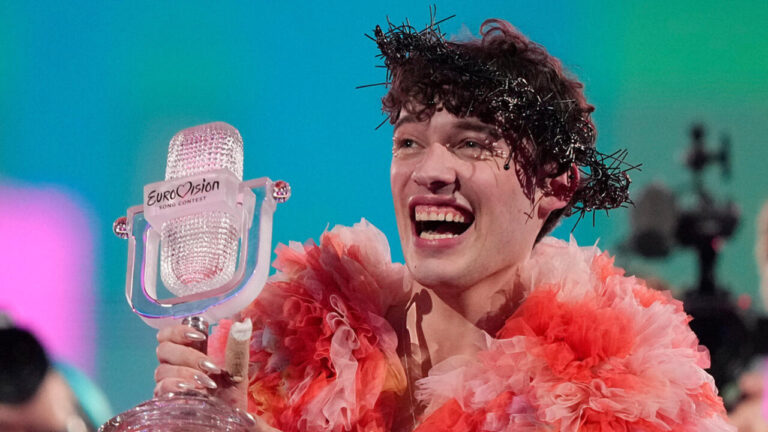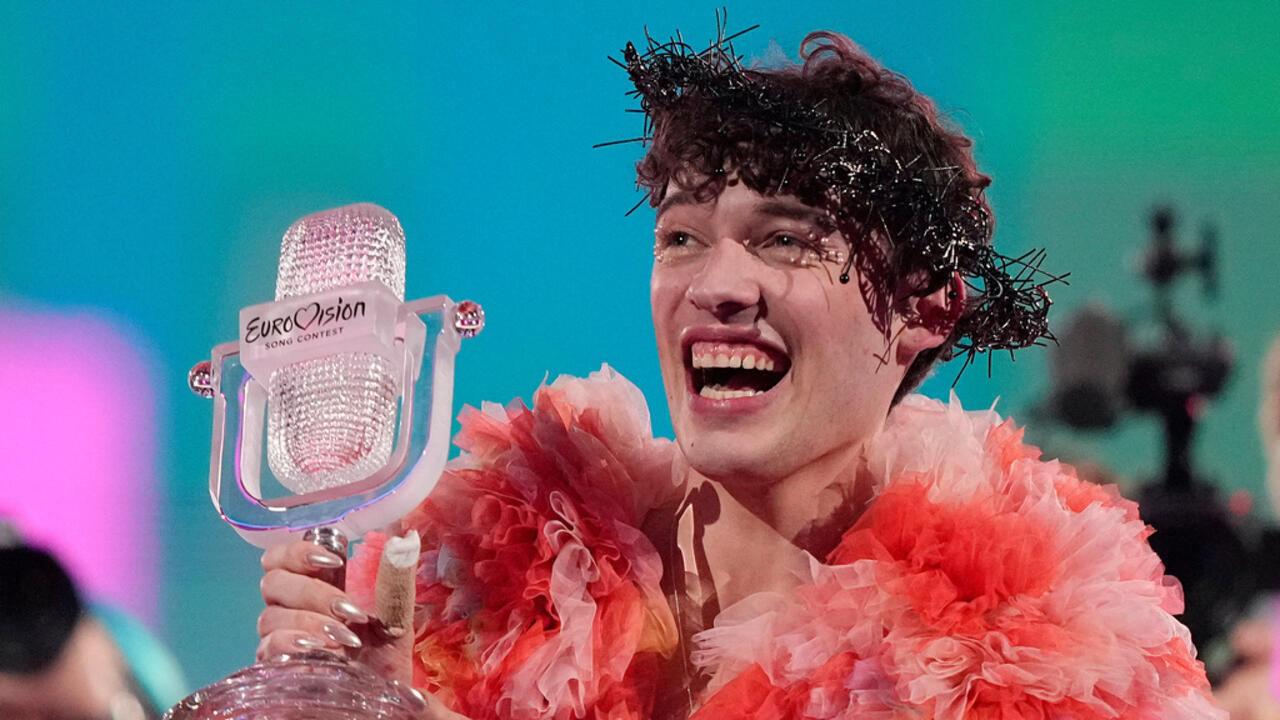
GENEVA — Swiss Eurovision winner Nemo announced on Thursday that they are returning their Eurovision trophy in protest of Israel’s continued participation in the annual contest, citing moral and ethical concerns related to the ongoing war in Gaza.
Nemo, the non-binary singer who won the 2024 Eurovision Song Contest with the genre-blending hit “The Code”—a mix of drum-and-bass, opera, rap, and rock—criticized the European Broadcasting Union (EBU) for allowing Israel to take part in the 2026 contest in Austria. Nemo called the decision inconsistent with the contest’s values of inclusion, unity, and dignity for all people.
“Eurovision says it stands for unity, for inclusion, and dignity for all people. And these are the values that make this contest so meaningful for me,” Nemo wrote in an Instagram post.
“But Israel’s continued participation, during what the U.N.’s Independent International Commission of Inquiry (on the Occupied Palestinian Territory, including East Jerusalem, and Israel) has concluded to be a genocide, shows there’s a clear conflict between those ideals and the decisions the EBU is making.”
International Response and Country Withdrawals
Nemo’s protest follows a wave of withdrawals by several countries in response to Israel’s clearance to compete. Iceland confirmed it will not participate in the 2026 Eurovision Song Contest, joining Spain, the Netherlands, Ireland, and Slovenia in citing Israel’s conduct in Gaza as the reason.
In Australia, the Greens party called for a boycott, stating:
“Eurovision’s unity through music is a sick joke when one contestant is committing ethnic cleansing, starving civilians, and killing children. While Israel performs pop songs, Palestinian children are buried under rubble. We can’t put entertainment above human rights.”
The controversy also highlights ongoing debates over perceived double standards in Eurovision. Russia has been barred from competing since 2022 due to its invasion of Ukraine, while Israel continues to participate despite allegations of violations of international law. Eurovision organizers have maintained that the contest is intended to be non-political, a stance that Nemo and others argue is contradicted by the decision to allow Israel’s participation.
The Trophy Return
Nemo emphasized that their protest is not aimed at individual artists but at the broader political implications of the contest’s decisions.
“This is not about individuals or artists. It’s about the fact that the contest was repeatedly used to soften the image of a state accused of severe wrongdoing, all while the EBU insists that this contest is non-political,” Nemo wrote.
“Live what you claim. If the values we celebrate on stage aren’t lived off-stage, then even the most beautiful songs become meaningless. I’m waiting for the moment those words and actions align. Until then, this trophy is yours.”
Nemo plans to send their Eurovision trophy back to the EBU’s headquarters in Geneva, making a public statement about the disconnect between Eurovision’s stated values and real-world events.
Broader Implications
The controversy has sparked debate across Europe and beyond, highlighting tensions between art, international relations, and activism. While Eurovision has historically prided itself on promoting unity through music, Nemo’s protest underscores how global conflicts can challenge even the most culturally unifying events.
Despite Israel’s rejection of any allegations of genocide, asserting its right to defend itself following the Hamas-led attack from Gaza on October 7, 2023, Nemo and others argue that allowing its participation undermines Eurovision’s core principles.
As the 2026 Eurovision Song Contest approaches, Nemo’s stand may inspire additional protests, withdrawals, and scrutiny over the contest’s handling of political and human rights issues.
If you want, I can also create a “viral news version” of this story that emphasizes Nemo’s emotional statements, the trophy return, and the social media reaction, which would make it more engaging for an online audience.