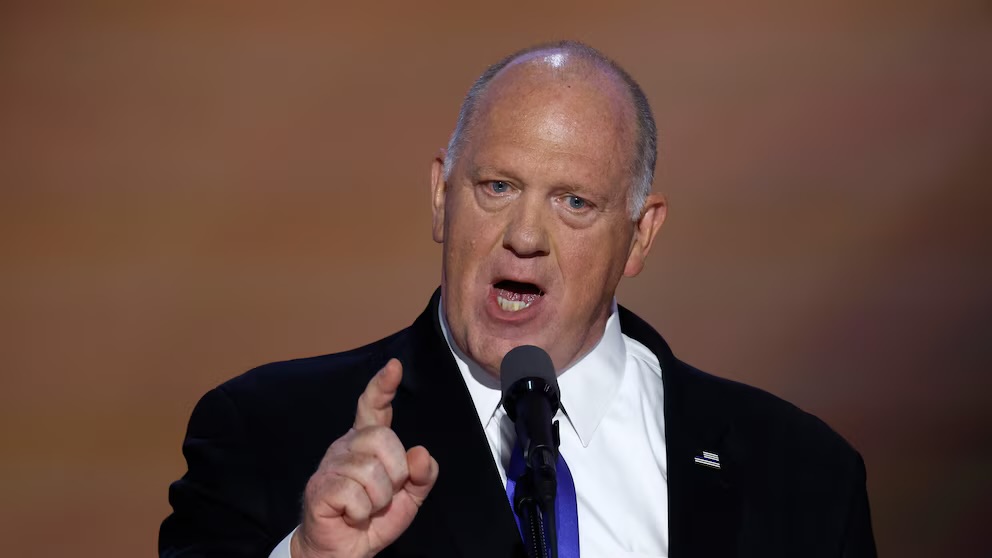
pFormer Border Czar Tom Homan has revealed that escalating threats tied to his role in enforcing U.S. immigration policy have forced him to live separately from his wife for months. Speaking during an interview on Fox News Channel, Homan accused certain reporters of crossing a dangerous line by attempting to track down his family members, calling those actions “beyond the pale” and deeply irresponsible.
Homan explained that since late March 2025, he has not been able to live with his wife due to repeated death threats directed at both him and his family. He said the situation worsened after he was appointed as President Trump’s top immigration enforcer, a role that placed him at the center of aggressive deportation policies and made him a frequent target of left-wing activists.
According to Homan, threats against Immigration and Customs Enforcement (ICE) officers have also intensified nationwide, including incidents of doxxing and public calls for violence. He stressed that the families of federal agents now face constant fear and uncertainty, and he called on state and federal authorities to do more to protect them.
During the interview, Homan responded to a question about how communities should support officers and agents whose lives have been disrupted by threats. He replied bluntly that protection is the most urgent need—not just for agents, but for their spouses and children as well.
“I haven’t lived with my wife since late March because of death threats,” Homan said. “And now there are reporters trying to find where my family is, trying to identify my sons. That crosses a line. It’s not journalism—it’s dangerous.”
He expressed frustration and anger at what he described as reckless behavior, arguing that public figures should be criticized for their policies, not have their families placed at risk. Homan said that media efforts to expose personal details only increase the likelihood of real-world violence.
Despite the threats, Homan emphasized that he does not want to see harm come to anyone. He said he prays nightly for the safety of border agents and their families, as well as for migrants who are detained, adding that he wants enforcement carried out without bloodshed or chaos.
This is not the first time Homan has spoken publicly about the toll the threats have taken on his personal life. Earlier in the year, he revealed in an interview with New York Post columnist Miranda Devine that his wife had been living separately for her own safety. He described the situation as painful and exhausting, noting that he sees her only when circumstances allow.
Homan also shared that his wife initially encouraged him to accept the role, even though it meant leaving a lucrative private-sector position and returning to a government salary. According to Homan, she told him he would regret it for years if he didn’t take the job—and she didn’t want to live with that resentment.
Despite protests outside his home, including one incident involving hundreds of demonstrators at his lake house in upstate New York, Homan remains defiant. He insists he will not step away from the role, saying he believes securing the border is too important to abandon, regardless of personal cost.
“I’m not going anywhere,” Homan said. “This job matters.”
The situation has reignited debate over the responsibilities of the media, the safety of public officials’ families, and the increasingly volatile climate surrounding immigration enforcement in the United States.