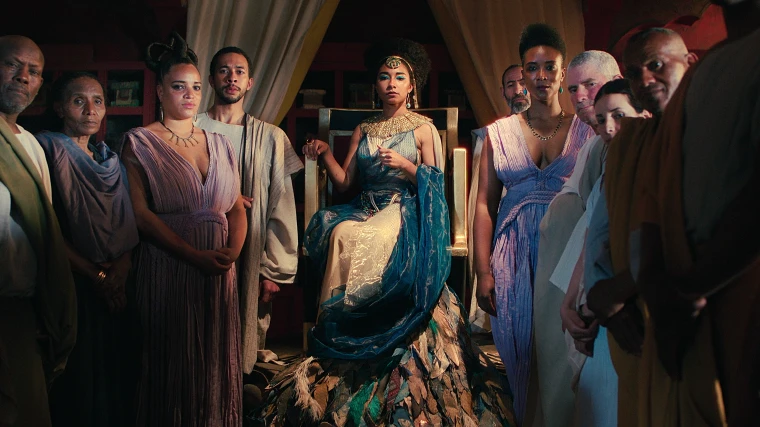
The Egyptian government has strongly criticized a recent Netflix production that depicts Cleopatra as a Black woman, arguing that the portrayal distorts well-established historical facts.
According to many historians, Cleopatra belonged to the Ptolemaic dynasty, a ruling family of Macedonian Greek origin founded by Ptolemy I, one of Alexander the Great’s generals. After Alexander’s conquest of Egypt, the country was ruled by Greek elites rather than native Egyptians. The Ptolemies were known for marrying within their own family to preserve their lineage, making it highly unlikely that Cleopatra had sub-Saharan African ancestry.
Despite this, Netflix’s docu-series African Queens: Queen Cleopatra presents the ruler as Black, a creative choice that has sparked backlash in Egypt. The Ministry of Tourism and Antiquities released a statement accusing the platform of misrepresenting Egyptian history, emphasizing that documentaries carry a responsibility to adhere to historical and scientific evidence.
The ministry also pointed to ancient coins and sculptures, noting that they depict Cleopatra with features commonly associated with Hellenistic Greek heritage. Officials argue that presenting speculation as fact in a documentary format misleads audiences and undermines historical accuracy.
Producers of the series have defended the casting decision by suggesting that Cleopatra’s ethnic background is open to interpretation due to gaps in historical records. Critics, however, reject this claim, stressing that the Macedonian origins of the Ptolemaic dynasty are well documented and leave little room for debate.
The controversy has reignited broader discussions about the balance between creative freedom, modern representation, and respect for historical truth.