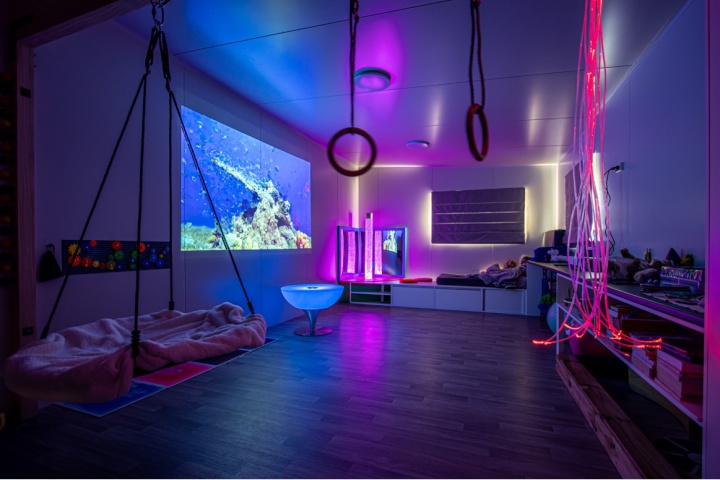
In Cherie Clonan’s Melbourne home, a room sits in complete darkness—a quiet retreat for her autistic son. Lined with soundproof panels, it offers a safe space for gaming or decompressing after school. “It’s a sanctuary for him,” Clonan explains.
Clonan, who was diagnosed autistic at 37, lives with her husband and two neurodivergent teenagers. Since purchasing their home five years ago, she has tailored the spaces to meet her family’s unique sensory needs. “Our household is split—half sensory-seeking, half sensory-avoidant,” she says. “I love bright, light-filled spaces, but my son prefers calm and darkness.”
As awareness of autism and ADHD grows, more families are adapting homes to support neurodivergent needs. Dr. Jan Golembiewski, an architect and design psychology researcher, notes that thoughtfully designed environments can reduce stress and improve daily functioning. “Even small adjustments can help with focus, calm, and a sense of ease,” he says.
Balancing Sensory Needs
Clonan began her redesign by mapping each family member’s sensory preferences using the Dunn Model of Sensory Processing. Bright, open-plan areas suit her sensory-seeking daughter and husband, while a second living space with dark walls, soft fabrics, and light-filtering shutters provides calm for herself and her son.
Practical organization is also key. “We have to be highly structured because some of us forget things easily,” Clonan says. Clever storage solutions and visible organization prevent daily chaos.
Thoughtful, Purpose-Built Spaces
Architect Eddie Page, diagnosed with ADHD at 13, emphasizes designing around daily routines. He recently built a 16-square-metre studio for a young adult with ADHD and autism. The compact space integrates sleeping, cooking, and living zones while minimizing sensory overload. Simple color palettes, hidden storage, blockout blinds, and filtered natural light create a calming environment.
Page explains, “We design for how someone actually lives—their rituals, sensory patterns, and task flow. It’s about reducing friction in daily life.” The result gives residents independence and a clear mental separation between activities, even in a small space.
Creating Safe and Supportive Homes
Clinical psychologist Luisa Livingstone points out that neurodivergent individuals often spend the day masking—exerting mental energy to focus and navigate social demands. Homes designed with sensory needs in mind can make everyday tasks more manageable.
For Clonan, reshaping the home has strengthened family bonds. “My son feels safe here,” she says. “This is a home that knows your brain—it supports you rather than challenges you.”
Page adds that empathy is central to good design. “Designing for someone else’s experience is about understanding their world. That’s what thoughtful design is truly about.”