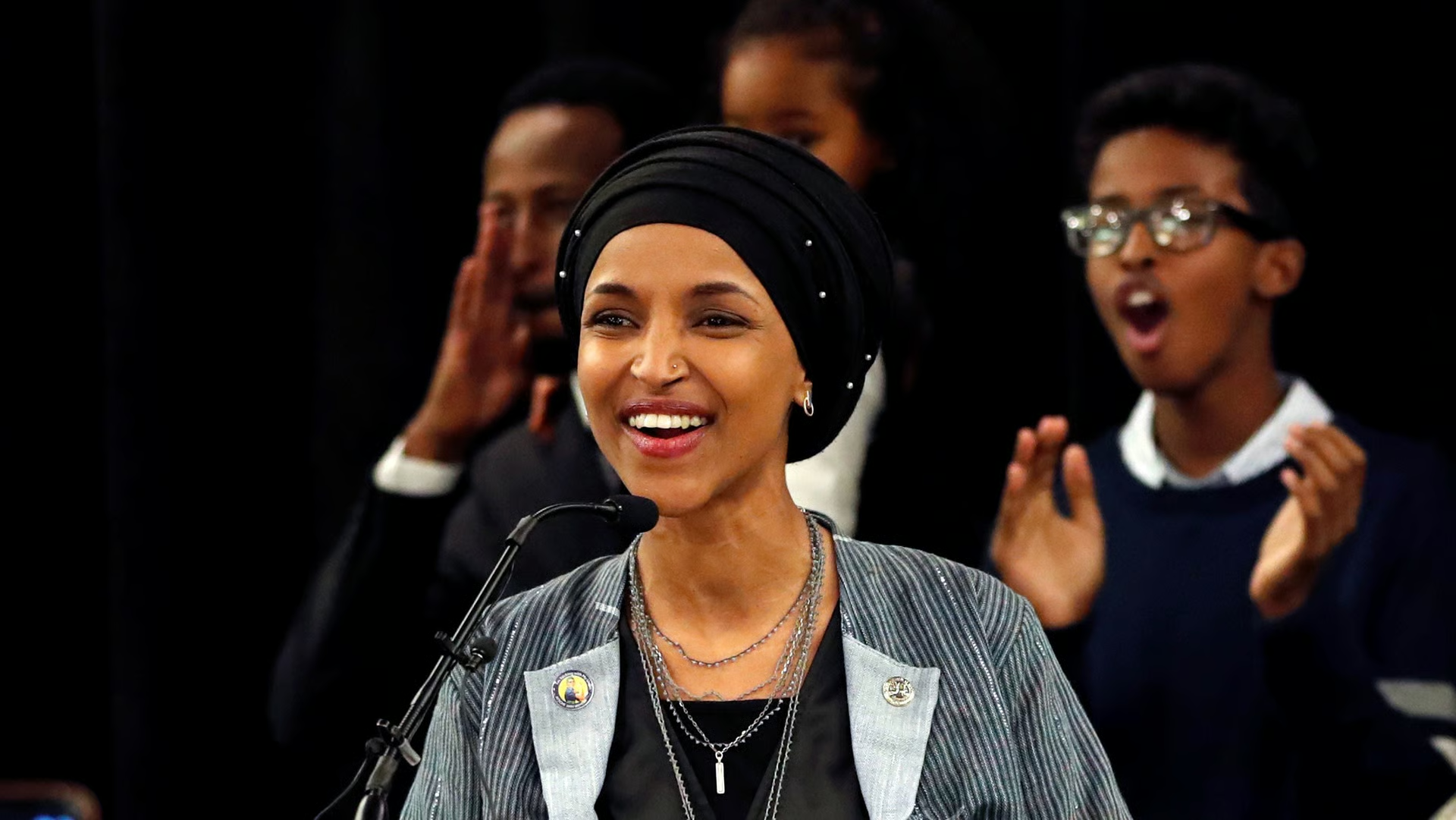
MINNEAPOLIS, MN — Democratic Representative Ilhan Omar (D-MN) has come under intense scrutiny over her 2020 MEALS Act, legislation that waived USDA oversight for child nutrition programs during the COVID-19 pandemic. The bill, designed to streamline food access for children, has been linked to a massive $250 million fraud scheme in Minnesota, primarily involving Somali migrants participating in the “Feeding Our Future” program.
Despite the mounting criticism, Omar expressed no regrets when confronted by reporters, insisting the bill achieved its stated goal of feeding children while deflecting responsibility for the fraud.
The Controversial MEALS Act
The MEALS Act was passed in 2020 with bipartisan support to temporarily ease federal oversight on child nutrition programs amid the pandemic. While intended to ensure continued access to meals for children, the legislation inadvertently created loopholes exploited by unscrupulous actors, allowing widespread fraud within Minnesota’s “Feeding Our Future” program. State officials estimate the total fraudulent activity exceeded $250 million, with most of the allegations connected to Somali community networks.
Omar’s Media Response
During a December press interaction, a reporter asked directly:
“Do you regret pushing for that bill, the MEALS Act? Do you think it led to the fraud?”
Omar, visibly unflustered, replied:
“Absolutely not, it did help feed kids.”
When questioned about an unrelated ICE stop involving her son and whether her anti-ICE rhetoric had endangered agents, Omar deflected responsibility:
“Well, the crackdown has terrorized my community, so they need to stop you.”
She also challenged the reporter on data transparency, claiming federal agencies had not fully shared information:
“He hasn’t been asking for that information. We haven’t gotten it from them. So if ICE is confirming now that they collect data and refusing to fight it to members of Congress, that’s an interesting mission.”
Public Reaction
The interview quickly went viral on social media, drawing widespread criticism from conservatives. One social media user stated:
“Ilhan Omar introduced the MEALS Act of 2020. It led to $250 million of fraud in Minnesota alone. Does she have regrets? Absolutely not. Omar needs to be investigated.”
Another user commented:
“None of this fraud was by accident. Ilhan Omar resettling in Minnesota and getting into elected office didn’t happen by accident. This wasn’t organic. She steals money from people she doesn’t care about and gives it to her tribe instead, and gets to walk around free of charge.”
The backlash reflects broader concern over fraud in taxpayer-funded programs in Minnesota, much of it tied to the Somali migrant population, which critics argue Omar has repeatedly defended.
Previous Responses and Congressional Oversight
This is not the first time Omar has dismissed allegations of fraud related to Minnesota’s welfare system. During a recent “Face the Nation” interview with Margaret Brennan, Omar addressed claims from Treasury Secretary Scott Bessent regarding Minnesota’s $1 billion+ “Feeding Our Future” fraud.
Brennan asked:
“The Secretary alleged that people tied to your campaign were involved in a broad scheme to rip off Minnesota’s welfare system. Do you want to respond to that?”
Omar insisted she was unaware of specifics and that her campaign had returned donations from implicated individuals:
“I really don’t, and I don’t think the Secretary himself understands what he’s referring to. We obviously had people who were able to donate to our campaign who were involved. We sent that money back a couple of years ago. And actually, I was one of the first members of Congress to send a letter to the Secretary of Agriculture asking them to look into what I thought was a reprehensible fraud that was occurring within the program.”
Political Implications
Omar’s refusal to express regret has sparked criticism across the political spectrum, particularly among Republicans and fiscal conservatives, who argue that the lawmaker enabled one of the largest fraud schemes in Minnesota history.
Supporters of Omar argue that the MEALS Act was passed with the intent of feeding children during a public health crisis, and that the congresswoman acted quickly to report any suspected wrongdoing once it came to her attention.
Nevertheless, the controversy has intensified calls for heightened oversight and accountability in federal and state nutrition programs, particularly where large migrant populations are involved.
Conclusion
As federal and state investigations into Minnesota’s “Feeding Our Future” fraud continue, Rep. Ilhan Omar maintains her defensive stance, framing the MEALS Act as a success for children while refusing to take responsibility for the systemic abuses that followed. The situation raises difficult questions about legislative oversight, immigrant communities, and the integrity of taxpayer-funded programs, and is likely to remain a major political issue in Minnesota heading into the 2026 election cycle.