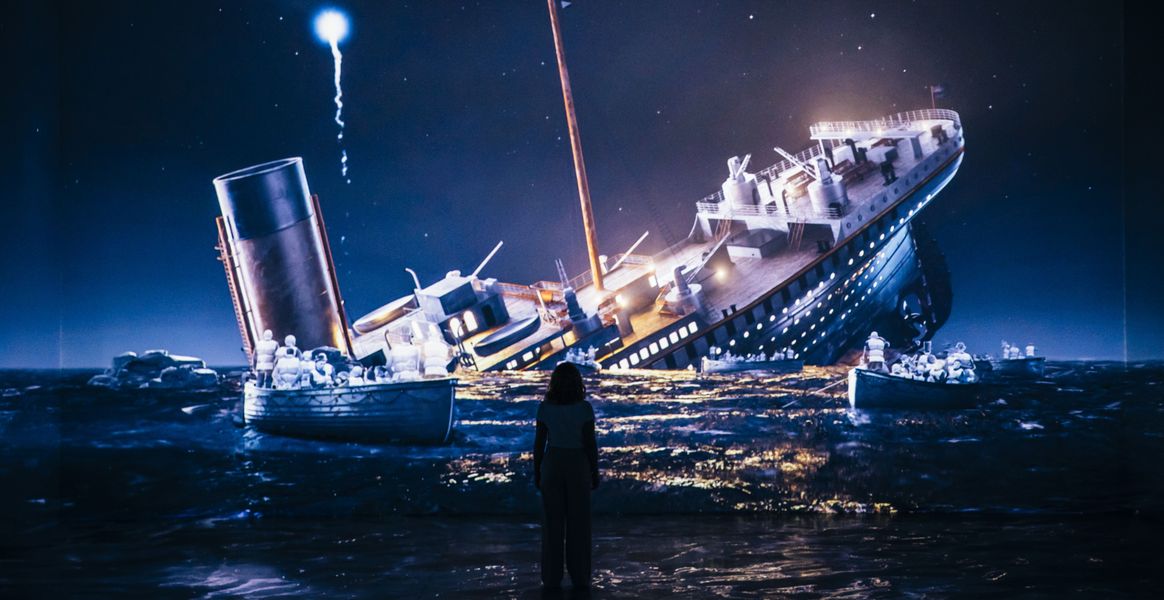
Across the world, visitors are flocking to immersive shows that recreate the Titanic’s doomed voyage. These exhibitions use virtual reality, video projections, and interactive elements to give audiences the feeling of being aboard the infamous ocean liner. But while some praise the technology and attention to detail, others question whether turning such a historic tragedy into entertainment is appropriate.
One of the highlights in London’s The Legend of the Titanic: The Immersive Exhibition features grand rooms slowly filling with projected water, while visitors can explore the ship’s opulent interiors through VR. The exhibition also offers souvenir photo ops, games, and a themed bar—elements that some critics argue cross the line from education to spectacle. Visitors, however, have praised the immersive technology for creating a sense of presence on the ship, even as some express discomfort at the commercialized aspects.
Another UK experience, Titanic: Echoes from the Past, takes a purely VR approach, guiding visitors through the ship’s final hours without sensationalizing the disaster. According to its organizers, the focus is on the historical story rather than the tragic loss of life, avoiding depictions of mass casualties while still capturing the tension of the iceberg collision.
Immersive entertainment is growing rapidly. Globally, the market for such experiences is projected to reach hundreds of billions of dollars by 2030, as audiences increasingly seek participatory and interactive forms of storytelling. Historical disasters like the Titanic, Pompeii, and other monumental events provide a compelling backdrop, blending education, spectacle, and human fascination with tragedy.
Yet, ethical concerns persist. Critics argue that turning real-life death and suffering into a commercial product risks exploitation. Questions also arise around accuracy: some exhibits contain factual errors or dramatizations that distort historical events. Museums and traditional historical institutions often adhere to ethical guidelines, but there are currently no formal standards for immersive disaster shows.
Supporters, however, highlight the educational potential and the natural human curiosity about catastrophic events. Psychologists note that morbid curiosity is common, and immersive experiences can provide insight into historical moments in a way that passive media cannot.
As immersive shows continue to expand globally, the debate over taste, accuracy, and commercialization is likely to persist. With audience demand growing, the Titanic and similar events are poised to remain a fixture in the cultural landscape—at once thrilling, educational, and ethically complex.