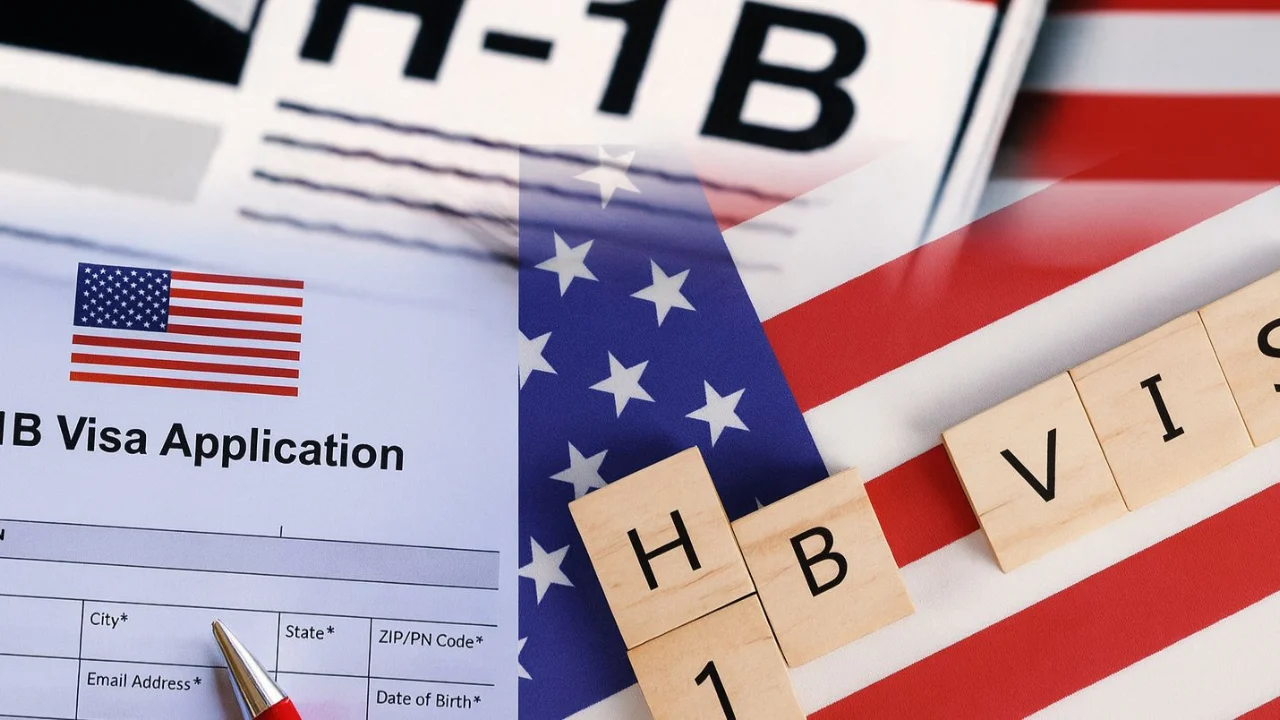
Major technology companies Google and Apple have warned employees holding H-1B visas to reconsider international travel during the holiday season, citing growing concerns that new U.S. security requirements could leave them stranded abroad for months while awaiting re-entry approval.
According to reports, immigration law firms representing both companies have issued internal advisories urging visa holders to limit travel to within the United States only. The warnings come amid significant backlogs at U.S. embassies and consulates worldwide, driven by a newly introduced social media screening policy implemented by the Department of Homeland Security (DHS).
A memo from BAL Immigration Law, which works closely with Google and was first reported by Business Insider, cautioned employees that visa stamping delays abroad could now stretch as long as 12 months in some locations. The firm explicitly warned that international travel could result in an “extended stay outside the U.S.” with no clear timeline for return.
“Please be aware that some U.S. embassies and consulates are experiencing significant visa stamping appointment delays,” the memo stated, adding that domestic travel remains the safest option for now.
The delays stem from a new federal directive requiring immigration officials to review five years of social media activity for travelers seeking entry into the United States. The policy, which formally took effect on December 15, applies to multiple visa categories, including H-1B, H-4, F, J, and M visas — affecting not only skilled workers but also students, researchers, and dependents.
Berry Appleman & Leiden, another immigration firm that advises Google, echoed the warning in a similar notice reported by NPR. The firm advised employees to avoid international travel altogether, emphasizing the unpredictability of processing timelines under the new screening regime.
Apple has issued comparable guidance through its immigration partner Fragomen. In a memo sent to Apple staff, the firm warned that employees without a currently valid H-1B visa stamp face heightened risks if they travel abroad.
“Given recent updates and the possibility of unpredictable, extended delays when returning to the U.S., we strongly recommend that employees without a valid visa stamp avoid international travel for the time being,” Fragomen wrote. Employees who must travel were urged to consult Apple’s immigration team in advance to fully understand the risks.
U.S. embassies have begun acknowledging the delays publicly. The U.S. Embassy in India confirmed this week that enhanced social media vetting is now part of the visa review process and advised applicants to apply as early as possible while preparing for additional processing time. India is one of the largest sources of H-1B workers, making the warning particularly significant.
The situation poses a major challenge for Google and Apple, both of which rely heavily on highly skilled foreign talent. Together, the two companies employ hundreds of thousands of workers globally, with a significant share of their U.S. workforce dependent on temporary work visas. Industry analysts warn that prolonged travel restrictions could disrupt operations, project timelines, and employee morale.
The concerns surrounding H-1B visas are not new under the Trump administration. In September, widespread panic erupted after President Donald Trump announced plans to introduce a $100,000 fee for H-1B visas and eliminate the traditional lottery system. The proposal sparked confusion and alarm across the tech sector, prompting companies such as Amazon, Microsoft, and JPMorgan Chase to instruct employees abroad to return to the U.S. immediately to avoid potential penalties.
Although the White House later clarified that the proposed fee would apply only to new applicants — not current visa holders — the damage had already been done. Airfare prices surged as workers rushed back, and uncertainty over the program intensified.
H-1B visas, established under the Immigration Act of 1990, are designed to allow U.S. employers to hire foreign workers with specialized skills that are scarce domestically, particularly in technology, engineering, and scientific research. While the visas are temporary by design, many holders eventually seek permanent residency through separate legal pathways.
According to Capital Economics analyst Stephen Brown, there are currently about 700,000 H-1B visa holders living in the United States, along with roughly 500,000 dependents. Any disruption to this population, experts warn, could have ripple effects across the U.S. economy.
The administration’s evolving stance on high-skilled immigration has also exposed divisions within Trump’s political coalition. Hardline immigration critics within the MAGA movement have pushed for tighter controls, while prominent business figures — including Elon Musk and Vivek Ramaswamy — argue that restricting skilled immigration harms American innovation and competitiveness.
Despite these tensions, leaders of major technology companies have made visible efforts to maintain strong ties with the administration. Executives including Apple CEO Tim Cook, Google CEO Sundar Pichai, Meta’s Mark Zuckerberg, and Elon Musk have attended high-profile events at the White House and Trump’s inauguration earlier this year.
For now, immigration lawyers warn that uncertainty remains the defining feature of the system. Until embassy backlogs ease and the scope of social media screening becomes clearer, H-1B workers face the uncomfortable reality that leaving the U.S. — even briefly — could mean being unable to return for months.