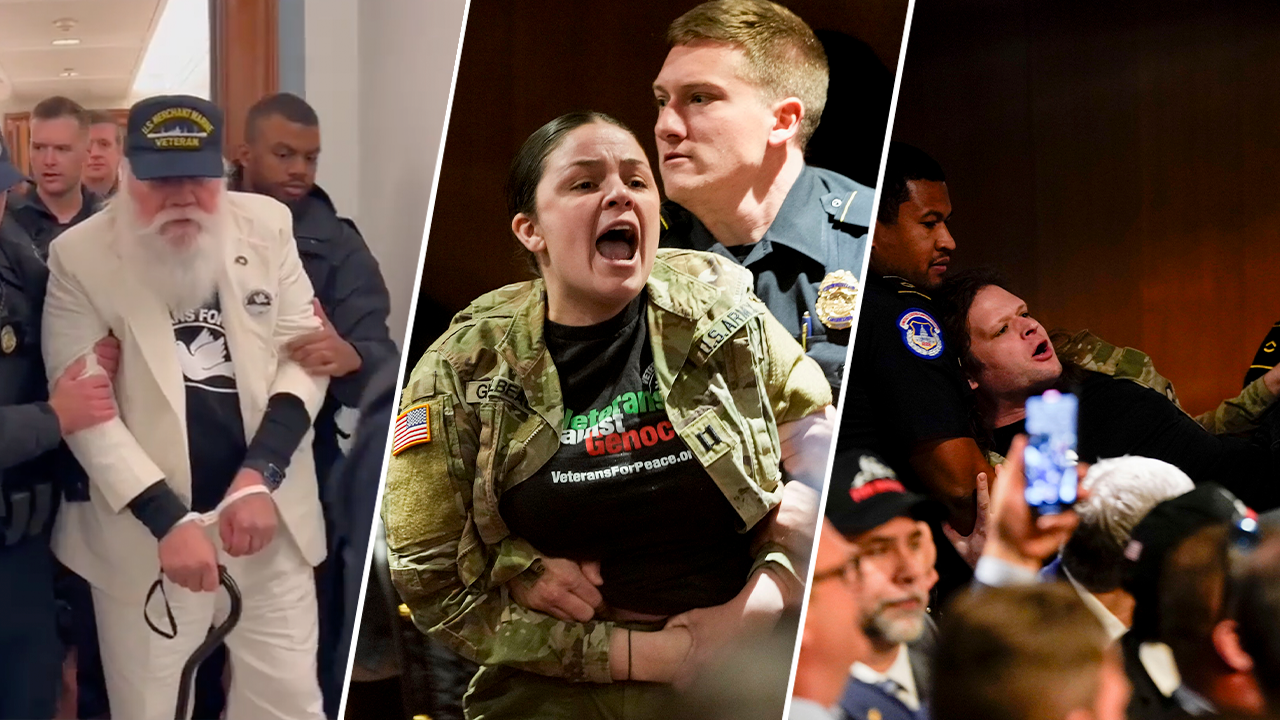
During the high-profile confirmation hearing of Pete Hegseth for Secretary of War earlier this year, proceedings were dramatically interrupted when three protesters stormed the Senate hearing room, forcing Capitol Police to intervene. The confrontation highlighted the growing tension surrounding U.S. foreign policy in the Middle East, particularly in relation to the ongoing conflict between Israel and Hamas, and the broader debate over America’s military and humanitarian priorities.
The Protesters and the Disruption
The first individual, a woman dressed in military-style fatigues, shouted as she stood up in the hearing, “Veterans are committing suicide and are homeless, but we send money to bomb children in Gaza!” Her comments reflected a broader criticism among anti-war activists who argue that U.S. resources are being misallocated overseas while domestic veterans’ issues remain unresolved. Capitol Police quickly moved to escort her out of the hearing, allowing Hegseth to continue his speech.
The second protester, an elderly man, was handcuffed with zip ties and removed from the hearing room without further incident. The third individual, a younger male also wearing fatigues, resisted arrest and had to be physically carried out by three officers, described by witnesses as being handled “like a sack of potatoes” due to his refusal to leave voluntarily. The incident temporarily halted the Senate proceedings and drew attention from national media outlets.
Hegseth’s Response and Defense
Despite the interruptions, Hegseth remained composed. He defended his record and reiterated his stance on U.S. support for Israel, stating unequivocally that he supports Israel’s “existential war against Hamas,” emphasizing that America must continue to defend its ally in the region. Hegseth’s comments drew applause from several Republican senators present at the hearing.
In response to questions from Senator Tom Cotton (R-Ark.), Hegseth addressed allegations made by protesters regarding U.S. military operations in Iraq and Afghanistan. When asked if he believed U.S. troops had committed “genocide” during those conflicts, Hegseth responded, “Senator, I do not. Our troops did the best they could with the resources available. Tragically, the outcome in Afghanistan under the Biden administration left a stain on that campaign, but it does not diminish the bravery or sacrifice of the men and women who served.”
Background on Pete Hegseth
Hegseth is a decorated military veteran and former Fox News contributor. He served as an infantry officer in the U.S. Army National Guard, graduating from Princeton University in 2003. His deployments included stints at Guantanamo Bay, Iraq, and Afghanistan, where he completed his service as a major and received multiple military honors, including the Bronze Star Medal and Combat Infantryman Badge.
In addition to his military career, Hegseth founded a nonprofit organization focused on veterans’ advocacy. During the confirmation process, he faced scrutiny over allegations of sexual misconduct, excessive drinking, and alleged mismanagement of his nonprofit. Hegseth denied all accusations, pledging that, if confirmed, he would abstain completely from alcohol during his tenure in the Department of War.
Political and Public Reactions
The hearing drew widespread attention due to the dramatic protests, Hegseth’s outspoken defense of Israel, and the broader implications of his confirmation. Conservative media praised Hegseth for maintaining composure and standing firm on U.S. foreign policy and veterans’ issues, while progressive outlets criticized the hearing for its handling of protesters and the perceived dismissal of humanitarian concerns in Gaza.
Online reactions were intense. Supporters of Hegseth applauded his commitment to defending U.S. troops and allies abroad, noting that his experience on the battlefield uniquely qualified him to lead the Department of War. Critics, however, argued that the Senate should have addressed the broader questions raised by the protesters, including U.S. aid allocations, veterans’ welfare, and the ethics of military engagement overseas.
Historical and Policy Context
Hegseth’s hearing occurred amid a period of heightened tension in the Middle East. Since 2023, Hamas and Israel had been engaged in ongoing hostilities, resulting in thousands of casualties. President Donald Trump’s administration brokered a peace deal in October 2025 that temporarily halted the conflict, but the situation remained fragile. Hegseth’s confirmation was seen by many as a signal of continued U.S. support for Israel and a reaffirmation of America’s commitment to Middle Eastern allies.
The protesters’ outbursts also reflected long-standing domestic concerns over veteran welfare. Reports indicate that thousands of U.S. veterans face homelessness and mental health challenges, leading some advocacy groups to argue that military spending abroad should be balanced with domestic support programs. Hegseth addressed these concerns during the hearing, emphasizing plans to improve resources for veterans while maintaining a robust foreign policy.
Impact and Implications
The hearing underscored the increasingly polarized political climate surrounding foreign policy and national defense. It highlighted the clash between activists demanding humanitarian oversight and government officials prioritizing strategic alliances and national security. Hegseth’s nomination also ignited discussion about the qualifications needed for high-level defense roles, the treatment of veterans, and the balance between domestic priorities and international obligations.
Conclusion
Despite the disruption, Hegseth navigated the hearing with composure and clarity, defending both his record and the broader U.S. strategic interests. The incident serves as a case study in modern political theater, where protests, media attention, and partisan debate intersect. Whether confirmed or not, Hegseth’s hearing has left an indelible mark on discussions about U.S. military policy, veterans’ welfare, and the role of public protest in shaping national discourse.