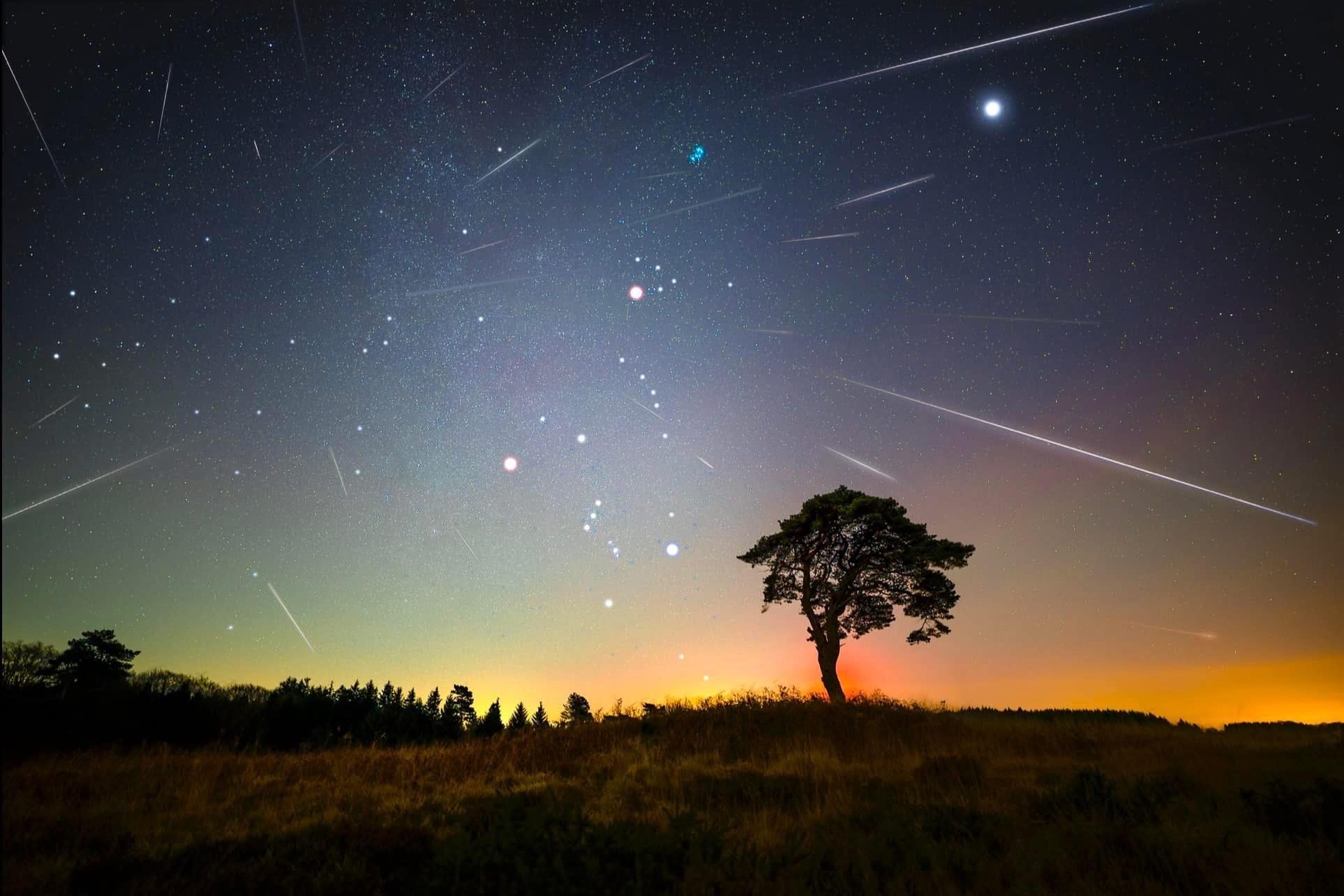
Sky-watchers are in for a treat as the Geminid meteor shower reaches its peak this weekend. The event is known for producing bright, slow-moving meteors and occasional fireballs that light up the night sky.
Peak activity is expected from late Saturday night into early Sunday, with the best viewing starting around 10 p.m. local time. With the moon only partly illuminated, observers in suburban areas may spot around 20 meteors per hour, while darker locations could see 40 or more.
In the Northern Hemisphere, the best views will be toward the eastern sky in the evening, while Southern Hemisphere viewers should look north after midnight. Early meteors tend to last longer and appear brighter, making them easier to notice.
The Geminids are ideal for photography due to their slower speed, and meteors may also be visible for several nights before and after the peak. The shower comes from debris left behind by the asteroid 3200 Phaethon and appears to radiate from the Gemini constellation.
The final meteor shower of the year, the Ursids, is expected around December 21–22 and will occur under very dark skies, offering another chance for stargazing.