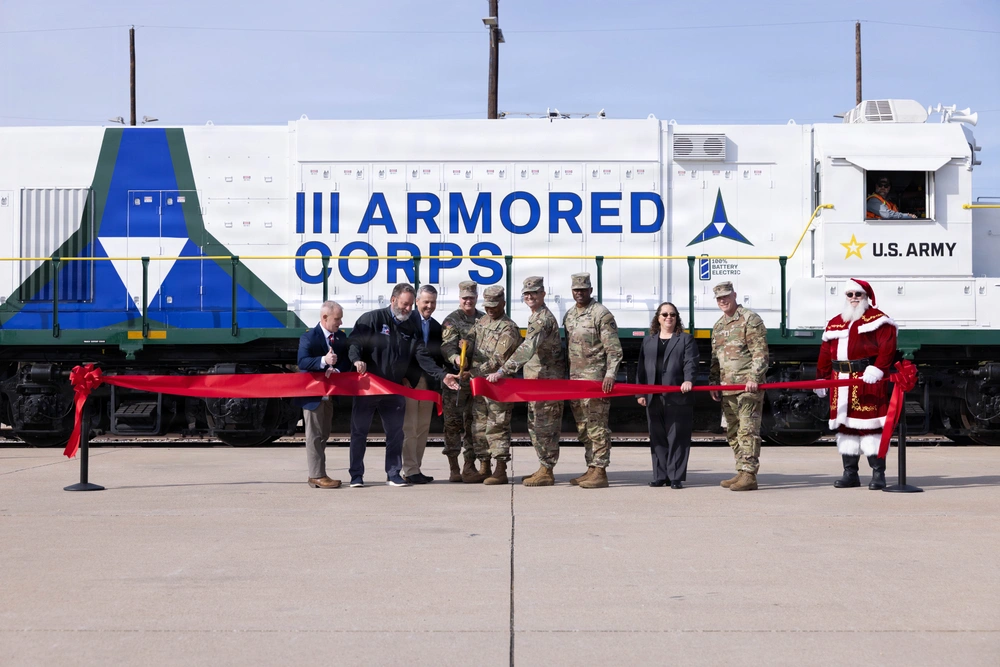
The U.S. Army has introduced its first fully battery-powered electric locomotive, marking a significant leap forward in the modernization of military transportation and logistics. This groundbreaking project involved the conversion of a traditional diesel locomotive into a high-performance electric train powered by advanced lithium-ion batteries. The initiative highlights the Army’s commitment to adopting cleaner, smarter, and more efficient technologies across its operational infrastructure.
The zero-emission locomotive is engineered to handle heavy military cargo, including vehicles, equipment, and supplies, while significantly improving energy efficiency on military installations. Unlike conventional diesel engines, the electric locomotive produces no exhaust emissions, contributing to improved air quality on bases and reducing the environmental footprint of military operations. Beyond its role in transport, the train is capable of acting as a mobile power source in emergencies, providing electricity to critical systems, field hospitals, command centers, and other essential infrastructure, thereby enhancing operational readiness and resilience.
This initiative is part of a larger strategic push by the Army to reduce reliance on fossil fuels, cut operational costs, and integrate sustainable technologies into defense operations. By leveraging battery-electric propulsion, the Army is not only reducing greenhouse gas emissions but also minimizing the logistical burden associated with fuel supply chains, which can be vulnerable in both peacetime and conflict scenarios.
The deployment of the electric locomotive represents a convergence of innovation, efficiency, and sustainability. It demonstrates how emerging technologies, such as high-capacity lithium-ion batteries and electric propulsion systems, can be applied to military logistics to achieve long-term operational benefits. This transformation aligns with broader Department of Defense goals to modernize infrastructure, improve energy resilience, and support environmentally responsible practices without compromising mission effectiveness.
Moreover, the locomotive offers the Army enhanced flexibility and adaptability in its operations. In addition to moving cargo, it can serve as a temporary energy hub, supporting rapid response efforts during natural disasters, base emergencies, or field operations. The combination of heavy-lift capacity, zero emissions, and mobile power capability makes this electric train a versatile and strategic asset for modern military logistics.
By embracing electric mobility and sustainable technologies, the U.S. Army sets a precedent for how defense organizations can modernize while addressing both environmental challenges and operational demands. The locomotive project is not just a technological innovation—it is a symbol of the Army’s long-term commitment to resilience, sustainability, and operational excellence in the 21st century.