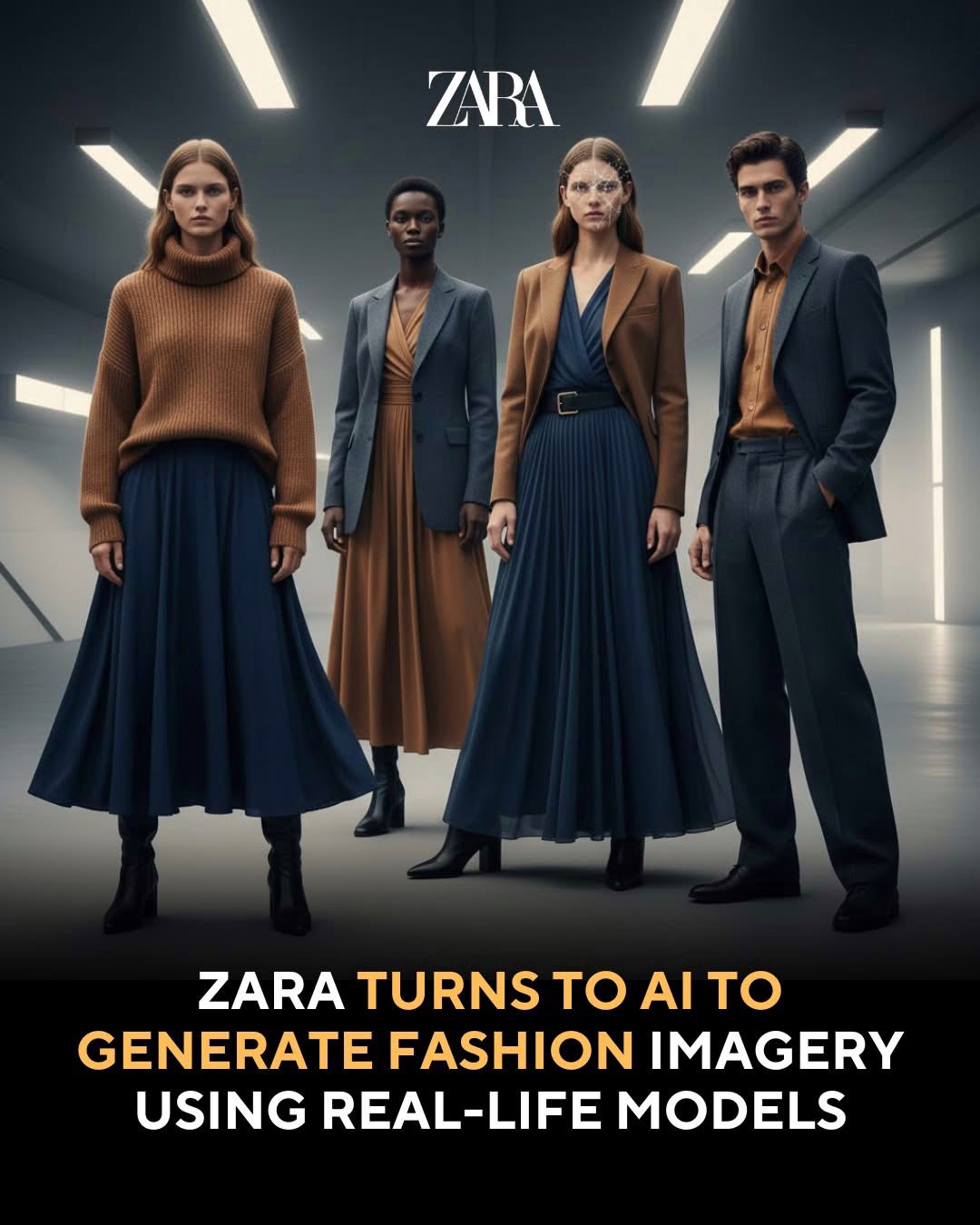
Zara has begun integrating artificial intelligence into its fashion imagery process, using AI-generated visuals based on real-life models in an effort to accelerate content production and improve efficiency. According to the brand, AI is being introduced as a supportive tool rather than a replacement for human creativity, with models still providing consent and receiving standard compensation for their work.
The move places Zara among a growing group of fashion retailers experimenting with AI-powered visuals to keep pace with the fast-moving demands of digital marketing and e-commerce. By using artificial intelligence, brands can generate multiple variations of campaign images more quickly, adapt content for different platforms, and reduce the time between design, production, and release.
Zara has emphasized that creative teams remain at the center of the process, with AI serving to enhance workflows rather than eliminate them. The company’s leadership argues that technology allows designers and marketers to focus more on concept development and storytelling, while automation handles repetitive or time-consuming tasks.
However, the growing use of AI in fashion has sparked debate across the industry. Photographers, stylists, makeup artists, and production crews have expressed concern that widespread adoption of AI-generated imagery could eventually reduce demand for traditional photoshoots and creative labor. Critics warn that while AI may begin as a complementary tool, it could gradually reshape job opportunities in fashion media and advertising.
Despite these concerns, Zara’s parent company continues to stress its commitment to creativity, craftsmanship, and traditional fashion storytelling. Executives maintain that AI will not replace the human elements that define fashion, but instead help brands remain competitive in an increasingly digital and fast-paced retail environment.
As artificial intelligence becomes more common across retail and creative industries, the fashion world faces an ongoing challenge: finding the right balance between innovation and the protection of creative roles. Zara’s approach highlights both the potential benefits and the complex questions surrounding AI’s expanding influence on how fashion is created, presented, and consumed.